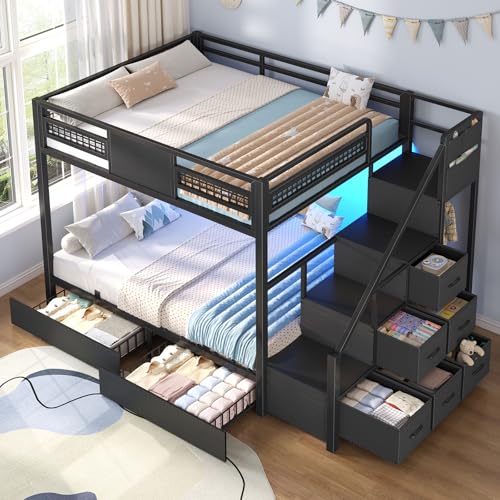
If you are researching full over full bunk beds with stairs and storage, you already know the core appeal: two generous full-size sleeping surfaces stacked in a single footprint, a staircase that feels safer and more accessible than a ladder, and built-in storage that makes every inch work harder. This guide walks you through the design, safety, and practical considerations so you can choose with confidence and set up a room that works for years.
Quick summary: A full over full bunk with stairs and storage is ideal for families with growing children, teens, guest rooms, or vacation homes. Prioritize a reinforced frame, a staircase with handrails and non-slip treads, and storage that integrates cleanly into the bed's footprint.
Why Choose a Full Over Full Bunk Bed with Stairs and Storage?
A full-size bunk bed offers significantly more sleeping space than twin-over-twin configurations. Each bunk accommodates an adult comfortably, which means the bed can serve children now and adults later. The staircase design addresses a common complaint about ladders: they are awkward for young children, difficult for older adults, and impractical when carrying bedding or belongings. Storage stairs turn that access route into a functional asset, with drawers, cubbies, or shelving built into each step.
For families comparing configurations, our guide to full over full bunk beds covers the broader category, while this page focuses specifically on models that combine stairs and storage. If you are specifically interested in adult-friendly designs, see full over full bunk beds for adults.
Key Design Features to Evaluate
1. The Staircase Design
Not all stairs are equal. Look for:
- Handrails on both sides — particularly important for the upper bunk.
- Non-slip treads — textured or rubberized surfaces reduce slip risk.
- Step depth and height — deeper, evenly spaced steps are easier to climb than steep, shallow ones.
- Wide landing at the top — some designs include a small platform before entering the upper bunk.
2. Storage Configuration
Storage stairs commonly integrate drawers, open cubbies, or a combination. Additional storage may appear under the bottom bunk or in a trundle space. Consider what you will actually store — bedding, books, clothing, or toys — and whether drawers (concealed) or cubbies (open) suit your habits better. If you want maximum drawer capacity, our page on full over full bunk beds with drawers covers drawer-focused designs.
3. Frame Material and Build Quality
Solid wood, metal, and engineered wood are the primary options. Metal frames with high-grade steel and reinforced joints often deliver excellent durability for the category, while wood frames suit bedroom aesthetics and can be more easily repaired. Whichever material you choose, verify the weight capacity for both bunks and check for corner reinforcement, slat spacing, and hardware quality.
4. Safety Certifications and Guardrails
Full-size upper bunks require robust guardrails on all open sides. Confirm that the model meets current safety standards and includes a full-length guardrail with minimal gaps. Stair openings should be sized to prevent entrapment, and the staircase should attach securely to the frame.
Comparing Configuration Options
| Tier | Best For | Typical Characteristics |
|---|---|---|
| Entry-level | Guest rooms, light use | Simpler frame construction, basic storage steps, standard guardrails |
| Mid-range | Everyday family use | Reinforced frame, deeper drawers, improved stair ergonomics |
| Premium | Long-term daily use, teens and adults | Heavy-duty construction, high weight capacity, premium hardware and finishes |
| Luxury / commercial-grade | High-traffic households, rentals, vacation properties | Commercial-grade steel or solid hardwood, extensive storage, reinforced staircase |
Higher tiers generally deliver smoother stair mechanisms, more durable drawer glides, and better hardware — differences that matter most in daily-use settings. For households with older children or adults using the top bunk, a high weight capacity model is worth prioritizing.
Stairs vs. Ladders: Practical Differences
Stairs occupy more floor space than a ladder, but they are easier and safer for children, more accessible for adults, and often provide storage that offsets the footprint. Ladders suit tight rooms but require confident climbing. If you are weighing both options, our comparison of full over full bunk beds with stairs versus ladder models covers the trade-offs in detail.
Space Planning and Room Requirements
A full over full bunk bed is a substantial piece of furniture. Plan for:
- Footprint: roughly the size of two full mattresses stacked, plus the staircase extension.
- Ceiling height: enough clearance above the top bunk for comfortable sitting and safe entry.
- Stair clearance: space to approach and use the stairs without obstruction.
- Door and window access: avoid blocking egress routes.
If the room is tight, consider a storage-focused configuration that consolidates belongings into the bed footprint, or a full size bunk bed with storage for a narrower overall profile.
Materials and Finish Considerations
Wood Frames
Wood blends naturally with bedroom decor and can be refinished. Check for solid wood in structural components and quality joinery. Our overview of wood full over full bunk beds covers species and finish options.
Metal Frames
Metal frames offer strength-to-weight advantages and often simpler assembly. Look for high-grade steel, rust-resistant coating, and reinforced corner brackets. See metal full over full bunk beds for construction details.
Assembly, Maintenance, and Longevity
Assembly complexity varies. Stair-and-storage models have more components, so plan for a few hours and two people. Follow the manufacturer's instructions precisely, especially for stair attachment and guardrail installation. Periodically check hardware tightness, drawer glides, and stair treads. Keeping the bed clean and free of excessive moisture extends its life, and a quality mattress protector helps preserve the mattresses.
Pro tip: If flexibility matters, look for a convertible or detachable design that separates into two standalone full beds when your needs change.
Frequently Asked Questions
Final Checklist Before You Choose
- Verify weight capacity for both bunks.
- Confirm guardrails meet safety standards.
- Check stair handrails, tread grip, and step ergonomics.
- Measure room footprint, ceiling height, and stair clearance.
- Decide between drawers, cubbies, or combined storage.
- Consider convertible or detachable designs for long-term flexibility.
- Review assembly requirements and hardware quality.
With the right model, a full over full bunk bed with stairs and storage delivers two comfortable sleeping spaces, safer access, and a tidier room — a genuinely practical investment for growing families and multi-use bedrooms.