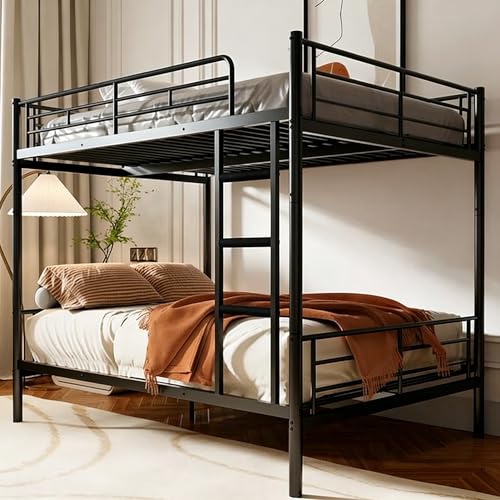
Full Over Full Metal Bunk Beds: The Complete Buying Guide
Steel-framed bunk beds that combine generous full-size sleeping space with serious durability. Learn how to choose the right metal bunk bed for your family, your room, and your long-term needs.
Why metal? A full over full metal bunk bed pairs two full-size sleeping surfaces with a steel frame that resists warping, holds its shape for years, and generally supports more weight than comparable wooden designs. For families with growing teens, adult siblings sharing a room, or guest rooms that need to sleep four, it is one of the most space-efficient and structurally dependable options on the market.
If you have already decided that two full-size bunks are the right configuration for your household, the remaining questions are mostly about engineering: steel gauge, weight rating, rail height, ladder design, and how the frame handles everyday movement. This guide walks through each of those decisions so you can evaluate any listing with confidence — whether you are shopping for a starter-tier frame or a commercial-grade unit.
Full over full metal bunk beds sit in a distinct category. They are larger than twin-over-twin models, heavier than futon-style bunks, and typically built with thicker steel than entry-level twin bunk beds. That extra mass is exactly what makes them suitable for older children, teenagers, and adults — but it also means you need to plan the room layout before the frame arrives.
Why Choose a Full Over Full Metal Bunk Bed?
The appeal of this configuration comes down to three practical advantages:
- Two full-size sleeping surfaces. Each bunk accommodates a standard full mattress (54 × 75 inches), giving each sleeper genuine room to stretch out. That is a meaningful upgrade over twin bunks, especially for teens and adults.
- Steel durability. A well-built metal frame does not develop the creaks, cracks, or joint separation that lower-grade wood frames can show after a few years of use. High-grade steel with a rust-proof finish holds up well in humid climates and busy households.
- Space efficiency. Two full beds stacked vertically occupy roughly the footprint of a single full bed, freeing up floor space for desks, storage, or play areas in shared bedrooms.
If you are weighing this against other bunk configurations, our overview of full over full bunk beds covers the broader category, while full bunk beds explores size variations across the range. For households where the top bunk may eventually need to support an adult, our guide to full over full bunk beds for adults is worth reviewing before you commit.
Metal Frame Construction: What Actually Matters
Not all steel bunk beds are built to the same standard. When you read a product listing, focus on these structural details rather than the marketing language.
Steel gauge and tubing thickness
Thicker steel tubing means less flex and less noise. Entry-level frames often use thinner tubing that can bow slightly under heavier sleepers, while mid-range and premium models use thicker gauge steel and reinforced corner joints. A heavy-duty frame should feel solid when you push against the top rail — if the listing emphasizes reinforced construction or commercial-grade steel, that usually signals a sturdier build.
Welded versus bolted joints
Welded joints are stronger and quieter than purely bolted connections. Many quality frames combine both: welded main assemblies with bolted crossbars for easier shipping. If a frame relies entirely on bolts, check the hardware quality and plan to re-tighten the bolts periodically.
Finish and rust resistance
Powder-coated finishes are the standard for durable metal bunk beds. A rust-proof or weather-resistant coating matters more than most buyers expect, particularly in humid rooms or coastal climates. Look for powder coating rather than painted finishes, as it resists chipping far better.
Buying tip: Weight capacity is the single most useful specification on a metal bunk bed listing. A frame rated at 400 pounds per bunk or higher is a solid choice for adult use. Entry-level frames may be rated lower — always confirm the number rather than assuming.
Weight Capacity and Adult Use
This is the question most buyers ask first, and it deserves a direct answer. Many full over full metal bunk beds are engineered for adult sleepers, but the capacity varies widely by tier.
| Tier | Typical Weight Rating per Bunk | Best For |
|---|---|---|
| Entry-level | Lower rating, suited to children and lighter teens | Kids' rooms, guest spaces with younger sleepers |
| Mid-range | Moderate rating, suited to teens and most adults | Teen bedrooms, shared rooms, mixed-age households |
| Premium / heavy-duty | High rating, engineered for adult sleepers on both bunks | Adult siblings, dorm-style rooms, long-term use |
| Commercial-grade | Highest rating, built for institutional and rental use | Guest houses, rentals, high-turnover environments |
If you expect adults on both levels, browse models specifically designed for that purpose in our high weight capacity full over full bunk beds collection. It filters out frames that are only rated for lighter sleepers.
Safety Features to Verify Before Purchase
Bunk bed safety comes down to a short list of features. Check each one on any listing you are considering.
Guard rails on the top bunk
The top bunk should have a guard rail on both sides, with the rail extending at least 5 inches above the mattress surface. This is why mattress thickness matters — a very thick mattress can render an otherwise adequate rail ineffective. A 6 to 8 inch mattress is generally the sweet spot for metal bunk beds.
Ladder design and attachment
A securely attached ladder with wide, flat steps is safer than a hook-on ladder with narrow rungs. Some frames include a ladder that can be positioned on either side, which helps with room layout. Flat-step ladders are easier on bare feet and reduce the chance of slipping.
Stability and anti-tip design
Look for frames with wide, flat feet or anti-slip foot caps. Some models include a wall-anchoring kit, which is strongly recommended for any bunk bed — especially in homes with children who may climb or play on the frame.
Clearance between bunks
Most full over full metal bunk beds offer roughly 36 to 38 inches of clearance between the bottom mattress and the underside of the top bunk. This is comfortable for most teens and adults, though taller sleepers may prefer a model with a slightly higher top bunk.
For families with younger children in the home, our full-size bunk beds for teens guide addresses the transition years when a child outgrows a twin but is not yet ready for a fully adult-rated frame.
Mattress Compatibility and Thickness
Metal bunk beds are compatible with most standard full mattresses, including memory foam, hybrid, innerspring, and latex. The main constraint is thickness.
- Best range: 6 to 8 inches. This keeps the top guard rail effective and keeps the total stack height manageable.
- Avoid on the top bunk: mattresses over 10 inches, unless the frame explicitly accommodates them.
- Foundation: many metal bunk beds use a metal slat system that supports a mattress directly. If the slats are widely spaced, a bunkie board or thin foundation may be needed for a foam mattress.
If you are also furnishing other beds in the home, our flippable mattresses guide explains how dual-firmness mattresses can extend the useful life of a bunk setup.
Assembly, Placement, and Room Planning
A full over full metal bunk bed is a substantial piece of furniture. Plan for the following before delivery:
- Two-person assembly. Most frames take one to two hours with two adults. The top bunk section is heavy and should not be lifted alone.
- Ceiling height. Measure the total height of the assembled frame plus the top mattress. You need comfortable headroom above the top bunk — ideally at least 30 inches between the top mattress and the ceiling.
- Floor footprint. A full-size mattress is 54 × 75 inches, so the frame footprint is slightly larger. Confirm doorways and stairwells can accommodate the boxed frame during delivery.
- Ladder side. Decide which side the ladder should sit on before assembly, and check that it does not block a closet, window, or doorway.
If floor space is very tight, you may want to compare this configuration with a low-profile full bunk bed, which reduces total height while keeping the two-bed footprint.
Configuration Options Worth Considering
Full over full metal bunk beds are available in several practical variations. Knowing which features matter to your household will narrow the field quickly.
- Convertible and detachable frames. Some models separate into two independent full beds. Our guide to convertible full over full bunk beds covers the trade-offs of this flexibility.
- Storage stairs. Stairs with built-in drawers are easier for younger children than ladders and add usable storage. See full over full bunk beds with stairs and storage.
- Trundle add-ons. A hidden third bed is useful for sleepovers. Compare full over full bunk beds with a full trundle.
- Under-bed drawers. If you need extra clothing or linen storage, full over full bunk beds with drawers integrate storage into the frame.
Feature-rich configurations typically sit in the mid-range to premium tier, while the simplest frames occupy the entry-level tier.
Which Tier Should You Choose?
Use this quick reference to match the frame to your household:
| Tier | Category | Best For |
|---|---|---|
| Entry-level | Essential tier | Children's rooms, light-use guest spaces, first bunk bed purchase |
| Mid-range | Balanced tier | Teens, mixed-age households, everyday family use |
| Premium | Top-tier | Adults on both bunks, long-term daily use, larger bedrooms |
| Commercial-grade | Professional-grade | Rentals, guest houses, high-turnover environments |
If you are still comparing material options, the wooden variants covered in our wood full over full bunk beds guide offer a warmer aesthetic, though metal generally wins on structural longevity and weight rating.
Frequently Asked Questions
Are full over full metal bunk beds strong enough for adults?
Yes. Premium and heavy-duty metal bunk beds are engineered with reinforced steel frames and often support 400 to 500 pounds per bunk. Always check the manufacturer's stated weight capacity before purchase, and choose a model rated for adult use if both bunks will sleep adults.
What mattress thickness works best for metal bunk beds?
A mattress between 6 and 8 inches thick is typically ideal. Thinner mattresses keep the top bunk's safety rail effective, while still providing adequate comfort. Avoid mattresses over 10 inches on the top bunk unless the rail height is specifically designed for them.
Do metal bunk beds squeak or wobble?
Entry-level metal frames can develop squeaks over time. Mid-range and premium models use thicker gauge steel, welded joints, and anti-slip hardware that minimize noise and movement. Proper assembly and periodic tightening of bolts also greatly reduce squeaking.
Can full over full metal bunk beds be separated?
Some models are designed as convertible units that separate into two independent full-size beds. If flexibility matters, look specifically for detachable or convertible designs, as not all metal bunk beds offer this feature.
How much clearance is there between the two bunks?
Most full over full metal bunk beds provide 36 to 38 inches of clearance between the bottom mattress and the underside of the top bunk. This is comfortable for most teens and adults, though taller sleepers may prefer models with slightly higher clearance.
Final Checklist Before You Buy
Before finalizing any full over full metal bunk bed, confirm these points:
- Weight capacity is stated per bunk and matches your heaviest sleeper.
- Guard rails on the top bunk are at least 5 inches above the mattress surface.
- The ladder is securely attached with flat, wide steps.
- The frame includes or recommends a wall-anchoring kit.
- Your ceiling height allows comfortable headroom above the top bunk.
- Mattress thickness stays within the recommended 6 to 8 inch range.
- Assembly requires two people and the hardware is included.
With those boxes checked, a full over full metal bunk bed becomes a long-term investment in both sleeping space and structural reliability — one that holds up to daily use far better than lighter-duty alternatives.