
Queen Over Queen Metal Bunk Beds: The Complete Buying Guide
Two full queen sleeping surfaces in one footprint. Learn how heavy-duty steel bunk beds work, what to check before buying, and how to choose a frame that is genuinely built for adults.
Explore Recommended ModelsWhy this guide exists: A queen over queen metal bunk bed is a serious piece of furniture. It supports two adults night after night, often in a shared room, guest suite, or vacation property. This guide walks you through frame construction, safety requirements, mattress pairing, and room planning so you can choose with confidence rather than guesswork.
What Is a Queen Over Queen Metal Bunk Bed?
A queen over queen metal bunk bed stacks two full-size queen sleeping surfaces within a single steel frame. Unlike the twin-over-twin bunks found in children's rooms, this configuration is built around adult proportions. Each tier accepts a standard queen mattress, which measures roughly 60 by 80 inches, and the frame is engineered to carry the combined weight of two adults plus bedding.
These beds typically appear in three settings: guest rooms that need to sleep four without consuming two bedrooms' worth of floor space, vacation rentals and cabins where maximizing occupancy matters, and multi-generational households where adult children or visiting relatives need a proper bed rather than a convertible sofa. The category overlaps with other large-format bunks, and if you are still comparing configurations, our guide to queen over queen metal bunk beds sits alongside related reading on twin over queen size bunk beds and bunk beds full over queen with trundle for households weighing different layouts.
The defining characteristic is the metal frame. Steel, rather than wood, allows manufacturers to achieve the load capacity required for two queen mattresses while keeping the overall profile relatively slim. That structural efficiency is what makes the queen-over-queen format practical in rooms where a wooden equivalent would feel overwhelmingly bulky.
Why Choose Metal Over Wood for a Queen Bunk Bed
Both materials can produce a safe, attractive bunk bed. The choice comes down to structural behavior, maintenance, and how the bed will be used over time.
Strength-to-Profile Ratio
High-grade steel tubing delivers substantial load capacity with narrower posts and rails than solid wood requires. In a queen-over-queen configuration, that difference is noticeable. A metal frame can hold two adult sleepers while leaving more visual breathing room in the bedroom, which matters in guest rooms and smaller spaces.
Stability and Motion Transfer
A well-engineered metal bunk bed with reinforced corner joints and cross-bracing tends to resist sway effectively. Motion transfer between tiers is a real concern when two adults share a bunk structure, and frame rigidity is the primary defense against it. Look for frames that include center support rails or a mid-span leg on the lower level.
Maintenance and Longevity
Metal frames with a rust-proof finish and powder-coated surfaces are largely maintenance-free. They do not warp, crack, or harbor dust mites the way wood can, and they wipe clean easily. For rental properties and households that reconfigure rooms often, that durability is a practical advantage.
When Wood Still Makes Sense
Wood bunks offer warmth and blend naturally with traditional or rustic decor. If style is the deciding factor and the room is generous, a solid wood frame is a legitimate choice. The trade-off is usually a heavier visual footprint and a greater need to monitor joints for loosening over the years. If you are furnishing around a specific aesthetic, browsing options like solid wood bunk beds with desk can help you compare how wood configurations handle the same spatial challenge.
Are Queen Over Queen Bunk Beds Suitable for Adults?
Yes, provided the frame is explicitly rated for adult use. The confusion around adult bunk beds usually stems from conflating children's furniture with adult-grade construction. A queen over queen bunk intended for adults should publish a per-level weight capacity, use reinforced steel, and include a guardrail on the upper bunk that meets recognized safety standards.
Several practical considerations apply specifically to adults:
- Access to the top bunk: Adults need a sturdy ladder with wide, flat steps and a secure attachment to the frame. A ladder that hooks over the rail is acceptable; one that merely leans is not.
- Headroom on the lower bunk: The gap between the bottom mattress and the underside of the upper frame determines whether an adult can sit up comfortably. Aim for at least 30 inches of clearance, and more if the lower sleeper reads or watches television in bed.
- Weight distribution: Two adults on a single frame produce significant dynamic load. Frames with a center support leg and multiple cross slats distribute that load far better than minimalist designs.
- Mattress thickness: Thicker mattresses reduce guardrail effectiveness on the upper bunk, so adult sleepers should favor mattresses in the 6 to 10 inch range.
For households comparing adult-oriented configurations, the broader category of full double bunk beds for adults covers similar design principles at a slightly smaller mattress size. If the room can accommodate a queen on the bottom and a twin on top, bunk beds with big bed on bottom is another layout worth evaluating.
Frame Construction and Load Ratings
The single most important specification on a queen over queen metal bunk bed is the per-level weight capacity. A frame rated for 250 pounds per bunk is a different product from one rated for 500 pounds per bunk, even if they look similar in a product photo. Always read the published rating and treat it as a hard limit, not a suggestion.
What to Inspect in the Frame
- Steel gauge and tube shape: Thicker gauge steel and square or rectangular tubing resist flex better than thin round tube. High-grade steel with a solid build is the baseline expectation for adult use.
- Corner joints: Reinforced, welded, or bolted corner connections with gussets are far stronger than simple butt joints held by a single bolt.
- Center support: A lower-bunk center rail or a mid-span leg prevents sagging under a queen mattress, which is heavier and more flexible than a twin.
- Slat system: Metal slats spaced no more than 3 to 4 inches apart provide proper mattress support. Closely spaced slats also extend mattress life.
- Finish: A rust-proof finish or powder coating protects the frame in humid environments, which matters for vacation properties and coastal homes.
Reading a Load Rating Correctly
Manufacturers sometimes publish a single combined capacity rather than a per-level figure. When that happens, look for clarification in the product documentation. A frame intended for two adults should state capacity for each bunk independently. If the listing is ambiguous, treat that as a caution flag and seek a model with transparent specifications.
Safety Features That Matter
Bunk bed safety is not a single feature but a combination of design elements working together. The following checklist covers the essentials for a queen over queen metal frame.
Upper Bunk Guardrails
The upper bunk must have a full-length guardrail on both sides, with the rail extending at least 5 inches above the top of the mattress. A rail that sits flush with a thick mattress offers no real protection. Some frames include a gap at the ladder entry; confirm the gap is small enough that a sleeper cannot roll through it.
Ladder Design and Attachment
A safe ladder has wide, flat steps rather than narrow rungs, and it attaches firmly to the frame rather than resting against it. Hooks or brackets that lock the ladder in place prevent shifting during use. If the ladder is removable, store it securely when not in use, especially in households with young children.
Frame Rigidity and Anti-Sway
Cross-bracing and reinforced joints reduce side-to-side movement. A bunk bed that sways noticeably when someone climbs the ladder is a frame that will loosen over time. Check whether the design includes diagonal braces or a stabilizing bar.
Assembly and Wall Anchoring
Follow the manufacturer's assembly instructions precisely, and use all included hardware. Where the instructions permit or recommend wall anchoring, do it. Anchoring is particularly important in earthquake-prone regions and in homes with children who may use the frame as a climbing structure.
Certifications and Standards
Reputable manufacturers reference recognized bunk bed safety standards in their documentation. Before purchasing, confirm the frame complies with the applicable safety requirements for your region. This is a basic due-diligence step, not an optional one.
Choosing the Right Mattress for Each Bunk
A queen over queen bunk bed is only as comfortable as the mattresses on it, and the wrong mattress can also undermine safety. Two constraints dominate the decision: thickness and firmness.
Thickness
Aim for a mattress between 6 and 10 inches thick. The upper limit exists for a reason. Guardrails are designed around a standard mattress height, and a 14-inch pillow-top on the top bunk can leave only an inch or two of protective rail above the sleeping surface. On the lower bunk, a very thick mattress eats into the headroom gap beneath the upper frame.
Firmness and Support
Medium-firm to firm mattresses generally perform well on metal slat systems. They distribute weight evenly, resist sagging, and suit the broadest range of sleepers. Very soft mattresses can compress through widely spaced slats, so confirm the slat spacing before pairing a plush mattress with the frame.
Box Spring or No Box Spring
Most modern metal bunk beds are designed to support a mattress directly on the slats, and a box spring is neither needed nor advisable. Box springs add height, which compromises guardrail clearance on the upper bunk, and they can destabilize the mattress on a metal platform. Check the specification, because a minority of frames are built for use with a low-profile foundation.
Mattress Type by Sleeper
Memory foam mattresses work well on bunk beds because they conform to the sleeper and produce less motion transfer between tiers. Hybrid mattresses offer a balance of support and pressure relief for couples or guests with varied preferences. Innerspring mattresses remain viable but tend to transmit more movement, which is worth considering when two adults share the structure. If you need to refresh the mattress on an existing frame, our queen size beds reference covers standard queen dimensions and compatibility.
Room Planning and Ceiling Height
A queen over queen bunk bed occupies the same floor footprint as a single queen bed but reaches much higher. Planning the room around that vertical dimension prevents unpleasant surprises on delivery day.
Ceiling Height
Most adult queen over queen bunk beds require a ceiling height of at least 8 feet. Measure the assembled frame height, add the upper mattress thickness, and then add a minimum of 30 to 36 inches of clearance above the top mattress. Anything less and the top bunk becomes cramped or, worse, a head-injury risk. Sloped ceilings and ceiling fans require additional scrutiny.
Floor Space and Clearance
Beyond the bed's footprint, allow at least 24 to 30 inches of walking space on the access side for the ladder and for making the beds. Making a queen-size upper bunk is awkward even with generous clearance; with a tight margin it becomes a daily frustration.
Supporting Furniture
Large bunk beds often replace the need for some secondary furniture, but bedside storage remains useful. A compact piece such as a small bedside chest of drawers can serve the lower bunk without crowding the room. Where floor space is truly limited, a floating bedside shelf with drawer keeps essentials within reach without consuming floor area.
Room Layout Considerations
Place the bunk bed so the ladder is not blocking a doorway or a closet. If the room has windows, avoid positioning the upper bunk directly beneath one, both for safety and for temperature control. In shared rooms, orient the bunks so each sleeper has some sense of personal space rather than facing a blank wall.
Quality Tiers Explained
Queen over queen metal bunk beds vary widely in construction quality. Because we do not publish figures, the following tier system describes relative market positioning and what each tier typically delivers. Use it to set expectations and to compare models on a like-for-like basis.
| Tier | Typical Construction | Best For | What to Expect |
|---|---|---|---|
| Entry-level | Lighter-gauge steel, basic welded joints, simple slat system | Guest rooms with occasional use, lighter sleepers | Functional and straightforward; verify per-level weight ratings carefully and expect a simpler ladder design |
| Mid-range | Thicker steel tubing, reinforced corners, center support rail, powder-coated finish | Primary adult sleeping arrangements, vacation rentals | Solid choice for the tier; better rigidity and a more confidence-inspiring ladder and guardrail system |
| Premium | High-grade steel, gusseted joints, anti-sway bracing, closely spaced slats, rust-proof finish | Full-time adult use, heavy sleepers, long-term installations | Well-specified for the category; reduced motion transfer and a frame engineered to stay tight over years of use |
| Luxury / commercial-grade | Oversized steel members, commercial load ratings, integrated ladder and storage options | Hospitality properties, high-turnover rentals, institutional settings | Professional-grade durability; a long-term investment built to withstand constant use |
A mid-range model usually offers noticeably smoother assembly tolerances and a sturdier ladder than an entry-level frame, while a premium model typically adds anti-sway engineering that matters when two adults share the structure nightly. Match the tier to how often the bed will be used rather than to a single feature that catches your eye.
Common Buying Mistakes to Avoid
- Ignoring the per-level weight rating. A combined capacity figure tells you little. Confirm what each bunk can support.
- Buying before measuring the ceiling. The most common source of return requests is a frame that leaves insufficient headroom on the top bunk.
- Pairing the frame with an overly thick mattress. A plush 14-inch mattress on the upper bunk compromises guardrail height. Stay within the 6 to 10 inch range.
- Overlooking ladder placement. Confirm which side the ladder mounts on and whether that position works with your room layout and doorways.
- Assuming all metal frames are equally rigid. Two frames can look similar in photos while differing substantially in steel gauge, joint design, and bracing.
- Skipping assembly planning. These frames are heavy and typically ship in multiple boxes. Arrange for a second person and clear the assembly area in advance.
- Neglecting wall anchoring. Where the instructions call for it, anchor the frame. It is a small step with a meaningful safety payoff.
If your household includes younger sleepers as well, our children's bunk beds with drawers guide covers the additional safety considerations for kids' configurations, which differ from adult-grade frames in important ways.
Frequently Asked Questions
Are queen over queen metal bunk beds safe for adults?
Yes, when the frame is explicitly rated for adult use. Look for reinforced high-grade steel construction, full-length guardrails on the upper bunk, and a published per-level weight capacity. Confirm the frame meets recognized bunk bed safety standards for your region before purchase.
How much ceiling height do queen over queen bunk beds require?
Most models need at least 8 feet of ceiling height. Measure the assembled frame, add the upper mattress thickness, and allow a minimum of 30 to 36 inches of clearance above the top mattress. Sloped ceilings and ceiling fixtures require extra care.
Do queen over queen metal bunk beds require a box spring?
Generally no. Most modern metal bunk beds use a slat system that supports the mattress directly. A box spring adds height, which reduces guardrail effectiveness on the upper bunk. Check the product specification, since a small number of frames are designed for a low-profile foundation.
What mattress thickness works best on a queen over queen bunk bed?
A mattress between 6 and 10 inches thick is ideal. The upper guardrail must extend at least 5 inches above the mattress surface, so thicker mattresses compromise safety. On the lower bunk, an overly thick mattress also reduces headroom beneath the upper frame.
Can a queen over queen bunk bed be disassembled and moved?
Yes. Most metal bunk beds are designed for bolt-together assembly and can be taken apart for relocation. Keep the assembly hardware organized and retain the instructions. Given the weight of the components, plan for two people during both disassembly and reassembly.
Recommended Queen Over Queen Metal Bunk Beds
⚠️ AFFILIATE DISCLOSURE: This website contains affiliate links. As an Amazon Associate, we earn from qualifying purchases. If you make a purchase through these links, we may receive a small commission at no additional cost to you. Read our full affiliate policy.

XUWANSHANG Queen Over Queen Bunk Bed Frame, Heavy Duty Metal Loft Bed for Adults/Teens, 400/600LB Capacity w/Ladder & Guardrail, Noise-Free Steel Slats, No Box Spring Required, Black
Check price on Amazon
FAVSH Queen Over Queen Metal Bunk Bed with Storage Shelf & USB Charging | Open Storage Shelf,2 AC Outlets,2 USB Ports,Full-Length Guardrail for Boys&Girls,Noise-Free & Stable,No Box Spring Needed
Check price on Amazon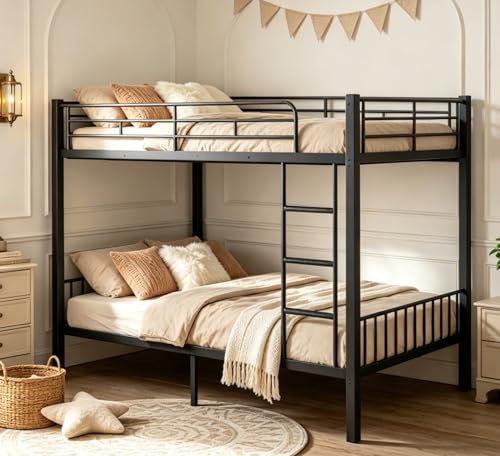
Feetice Queen Over Queen Metal Bunk Bed, Heavy Duty Bunk Bed for Adults with 400/600lbs Capacity, Full-Length Top Guardrails, Anti-Slip Foam Ladder & 9.8" Underbed Space,Black
Check price on Amazon
HKOLIE Queen Over Queen Metal Bunk Bed, Convertible Design, Black | Separates into Loft Bed & Platform Bed, Heavy Duty Noise-Free Frame with Safety Rails for Adults, Teens & Kids
Check price on Amazon
Full XL Over Queen Bunk Bed with Trundle, Convertible Detachable 3 Beds | Heavy-Duty Metal Frame with Full-Length Guardrails & EVA Padded Ladder for Teens and Adults
Check price on AmazonDisclaimer
The information provided on SleepWisePicks is for educational and informational purposes only. We are not medical professionals, and our content should not replace professional medical advice, diagnosis, or treatment. Always consult with your physician or sleep specialist regarding sleep disorders or chronic pain. Some content may use AI assistance. Always check product safety standards and certifications before purchasing. If you do not agree, please do not use this website. Read the full disclaimer.