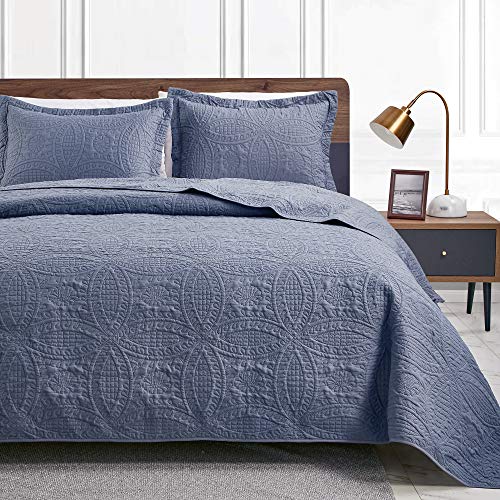
Queen Size Bedspreads & Comforters: The Complete Guide
Everything you need to choose the right queen bedspread or comforter — sizing, fill, fabric, and style — so you can buy with confidence.
Explore Top PicksWhy this guide matters: A queen bed is the most popular mattress size in the United States, yet many shoppers end up with a bedspread that is too short on the sides or a comforter that bunches at the foot. This guide walks you through sizing, fill power, fabric choices, and care so you can pick a queen bedspread or comforter that fits, feels, and lasts.
Queen Bedspread & Comforter Sizing Explained
A standard queen mattress measures 60 x 80 inches. To achieve a proper drape, a queen bedspread should measure roughly 90 x 100 inches, allowing a 12 to 18 inch overhang on the sides and foot. Comforters run slightly smaller because they are designed to sit on top of the bed and often pair with a bed skirt or a separate dust ruffle.
If you prefer a tailored look with full coverage, choose a queen size bedspread set that includes matching shams. For layered styling, a queen comforter set with bedskirt gives you the flexibility to mix and match textures. Shoppers who want a quilted finish should look at queen size quilted bedspread sets, while those who want versatility can explore queen comforters and bedspreads side by side.
Fill Materials: Down, Down-Alternative, and Cotton
Down fill offers the best warmth-to-weight ratio and loft, but it requires careful cleaning and is not suitable for allergy-sensitive sleepers. Down-alternative fills, usually polyester or microfiber, mimic the loft of down at a mid-range tier and are machine washable. Cotton and cotton-blend fills sit in the essential tier — breathable, durable, and easy to care for, though they provide less insulation in cold rooms.
For warm sleepers, a lightweight cotton or bamboo blend comforter works well. For cold bedrooms, a down or high-loft down-alternative comforter delivers better insulation. If you want a traditional layered look, pair a queen size comforter and bedspread combination with a quilted coverlet.
Fabric Choices: Cotton, Linen, Microfiber, and Matelassé
The outer fabric affects breathability, durability, and how the bedspread feels against your skin. Cotton percale is crisp and breathable, making it a solid choice for year-round use. Linen offers a relaxed, textured look and improves with washing, but it wrinkles easily. Microfiber is wrinkle-resistant and sits in the entry-level tier for maintenance, while matelassé and quilted finishes add visual depth.
If you love a textured, traditional look, Portuguese matelassé bedspreads offer a woven, heirloom-quality finish. For a plaid or country aesthetic, a plaid bedspread pairs well with rustic decor. And if you prefer a soft, romantic palette, a queen purple bedspread or a queen blue bedspread can anchor the room’s color scheme.
Style and Color: Matching Your Bedroom
Queen bedspreads and comforters come in a wide range of colors and patterns, from solid neutrals to floral and geometric prints. Solid colors in white, gray, or beige are versatile and easy to layer. Patterned options like a purple flower bedspread or a purple and gold bedspread can serve as a focal point. For a cohesive look, consider a queen size bedspread with matching curtains or a set that includes matching shams.
If you are styling a guest room or a primary suite, a queen bedspread set simplifies the shopping process by bundling the bedspread with shams and sometimes a bed skirt. For a more tailored, hotel-like look, a queen size bedspread set in a neutral tone works well with almost any decor.
Care and Maintenance Tips
Most queen bedspreads and comforters should be washed every two to three months. Always check the care label before washing. Down comforters often require a front-loading machine and dryer balls to restore loft, while down-alternative and cotton fills are usually machine washable on a gentle cycle. Avoid over-washing to preserve the fill and fabric finish.
For allergy-sensitive sleepers, choose a down-alternative comforter and wash it more frequently. If you have pets, a removable, washable cover or a quilted bedspread that withstands frequent washing is a practical choice. Store out-of-season bedding in a breathable cotton bag rather than a plastic bin to prevent moisture buildup.
How to Choose the Right Queen Bedspread or Comforter
Start with your sleep temperature and bedroom climate. Hot sleepers should prioritize breathable cotton or linen covers with lightweight fills, while cold sleepers benefit from down or high-loft down-alternative comforters. Next, decide on the level of coverage: a bedspread drapes over the sides, while a comforter sits on top and often pairs with a bed skirt. Finally, consider maintenance — machine-washable fills are easier for busy households, while down and matelassé finishes may need more careful care.
If you are also updating your bed frame, browse queen beds or queen platform beds with headboard to coordinate the look. For a complete bedroom refresh, pair your new bedspread with pure cotton queen sheets and a queen size bedspread that fits your style.
Queen Bedspread & Comforter Comparison by Tier
| Tier | Best For | Typical Features |
|---|---|---|
| Essential tier | Guest rooms, everyday use | Microfiber or cotton-blend shell, polyester fill, machine washable |
| Mid-range | Primary bedrooms, year-round comfort | 100% cotton shell, down-alternative fill, quilted or matelassé finish |
| Premium | Cold sleepers, luxury feel | Down or high-loft down-alternative fill, sateen or linen shell, tailored shams |
| Luxury | Design-focused bedrooms, heirloom quality | European linen or Egyptian cotton, hand-finished quilting, coordinated curtain sets |
Frequently Asked Questions
What size bedspread fits a queen bed?
A queen-size bedspread typically measures around 90 x 100 inches, which allows a 12 to 18 inch drape on the sides and foot of a standard 60 x 80 inch queen mattress.
What is the difference between a bedspread and a comforter?
A bedspread is thinner and designed to cover the entire bed including the sides, while a comforter is thicker, filled for warmth, and usually sits on top of the bed with a bed skirt or layered blankets.
Which fill material is best for a queen comforter?
Down and down-alternative fills provide the best loft and warmth. Cotton and polyester blends are durable and easier to maintain, while down-alternative is a good choice for allergy-sensitive sleepers.
How often should a queen bedspread be washed?
Most queen bedspreads and comforters should be washed every two to three months, or more often if you have pets or allergies. Always follow the care label instructions.
Ready to upgrade your bedroom? Browse our recommended queen bedspreads and comforters below, or explore queen size bedspreads and comforters for more styling ideas.