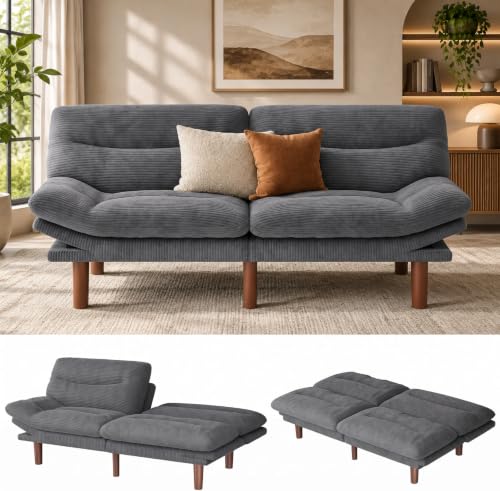
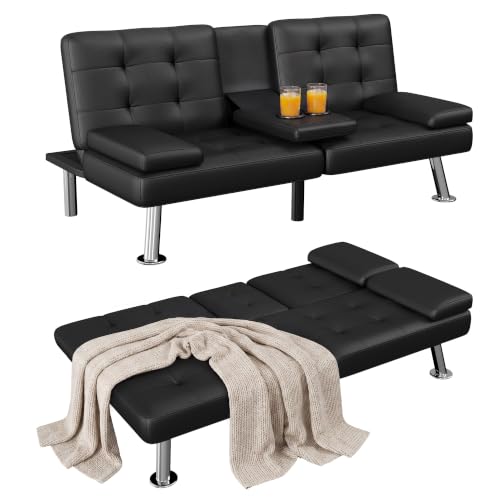
Sofa Beds & Futons for Sale: The Complete Buying Guide
Thinking about a sofa bed or futon? This guide walks you through mattress types, frame construction, room fit, and comfort factors so you can choose a sleeper that works for guests and everyday living.
Start the Guide
Why this guide matters: A sofa bed or futon is a dual-purpose investment. It must support sitting comfort by day and sleeping comfort by night, often within the same small footprint. Buyers who know what to look for end up with furniture that lasts through years of daily use and overnight guests.
Sofa Beds vs. Futons: Understanding the Difference
Before comparing models, it helps to understand that these two categories solve the same problem in different ways. A sofa bed and futon both save floor space, but their construction affects how they feel, how they fold, and how long they last.
A sofa bed (also called a sleeper sofa) hides a folding mechanism and mattress inside an upholstered frame. When opened, the mattress unfolds from a compartment beneath the seat. These are typically heavier and more furniture-like, blending into a living room or guest room. A futon uses a simpler frame where the seat cushion is the mattress — the entire surface folds flat. Futons tend to be firmer, thinner, and easier to move, which is why they are popular in studios, dorms, and multi-use rooms.
If you browse collections of sofa beds and sleepers, you will notice that the mattress quality is the single biggest factor separating comfortable models from disappointing ones. The frame matters too, but a great frame cannot rescue a thin, low-density mattress.
Popular Types of Sleeper Sofas and Futons
Essential tier
Pull-Out Sofa Beds
Classic sleeper sofas with a fold-out mattress. Entry-level and mid-range models dominate this category; the best versions use memory foam or hybrid mattresses.
Mid-tier
Click-Clack Futons
Simple frames that fold flat with a click. Lighter and easier to reposition, ideal for studios, guest corners, and rooms that change function during the day.
Mid-to-high tier
Daybeds with Trundles
A sofa by day and a bed by night, often with a hidden second sleeping surface. Well-suited to guest rooms and kids' spaces.
Premium tier
Air Mattress Sofa Beds
A hybrid design where the sleeping surface inflates for support. These models are typically among the most comfortable options for overnight guests.
High-end tier
Sectional Sleeper Sofas
Larger configurations with integrated sleepers. These are heavy-duty, furniture-grade pieces intended for long-term living room use.
Entry-level
Armless Futons
Compact and versatile, often used in small apartments. They fold flat with minimal clearance, which makes them a practical choice for tight rooms.
Sofa Bed vs. Futon: Side-by-Side Comparison
The table below compares the two categories across the factors that matter most during research. Use it as a starting point, then dig into the sections that follow.
| Feature |
Sofa Bed (Sleeper Sofa) |
Futon |
| Sleeping surface |
Integrated mattress, often foam or spring |
The seat cushion itself becomes the mattress |
| Typical tier |
Entry-level to premium, with hybrid options |
Mostly entry-level to mid-range |
| Comfort profile |
Softer, more mattress-like |
Firmer and thinner |
| Weight and mobility |
Heavier, less easy to move |
Lighter, easier to reposition |
| Best for |
Guest rooms, living rooms, nightly use |
Studios, dorms, multi-use rooms |
| Maintenance |
Mattress may be replaceable; mechanism needs care |
Cushion may need rotation or replacement over time |
Mattress Types in Sofa Beds and Futons
The mattress inside a sleeper sofa is the difference between a good night and a restless one. In futons, the cushion density plays the same role. Here is how the main options compare:
Memory Foam
Conforms to the body and hides the folding mechanism underneath. Memory foam is popular in mid-range and premium sofa beds because it feels like a real mattress. It can sleep warm, so look for gel-infused versions if heat retention is a concern. A good reference point is our list of sofa beds with memory foam mattress options.
Innerspring and Hybrid
Spring-based mattresses offer more bounce and airflow. They are typically heavier and thicker, so they suit sofa beds with deeper frames. Hybrid designs combine foam and springs to balance support and pressure relief.
Air Mattress Sleepers
An inflatable sleeping surface integrated into a sofa frame. These models can be very comfortable for guests and are often a good choice for occasional use. See sofa bed with air mattress hide-a-beds for examples of how this design works.
Futon Cushions
Futon cushions are usually cotton, foam, or a blend. Denser foam holds up longer, while cotton blends feel more traditional. Thickness matters: very thin cushions suit occasional use, while thicker cushions are better for regular sleeping.
Buying tip
Ask whether the mattress or cushion is replaceable. A replaceable mattress extends the life of the whole sofa, which makes a mid-range model a smarter long-term investment than an entry-level one with a sealed mattress.
Frame Construction and Durability
The frame determines how stable the sofa feels, how smoothly it opens, and how long it lasts. Look for these signals when you compare models:
- Solid wood or high-grade steel frames — these resist warping and wobbling better than particleboard.
- Reinforced folding mechanisms — heavy-duty hinges and locking joints reduce the risk of sagging over time.
- Even weight distribution — a well-built frame spreads load across the base rather than concentrating it at the joints.
- Rust-proof finishes — important for metal frames, especially in humid climates.
In futons, the frame type is just as important. A sturdy wooden futon frame with thick slats will outlast a lightweight metal frame with thin bars. If you plan to use the futon as a primary bed, prioritize frame stability over decorative details.
Measuring Your Room Before You Buy
The most common mistake buyers make is measuring the sofa only in its closed position. A sofa bed needs clearance when fully extended, and some mechanisms require space behind the frame. Here is a practical measuring checklist:
- Measure the full open length and width, not just the seat dimensions.
- Check whether the mechanism is front-opening or back-opening.
- Leave walking clearance around the open bed.
- Confirm door widths and hallway turns if delivery requires assembly inside.
For tight rooms, compact designs matter. Our guide to sofa beds for small rooms covers layouts and mechanisms that work in limited footprints. If the room doubles as a home office, a sofa day bed can be a smarter fit than a full sleeper sofa.
Comfort: What Separates a Good Sleeper from a Great One
Comfort is subjective, but a few design factors consistently separate comfortable models from disappointing ones:
- Mattress thickness — thicker mattresses reduce the chance of feeling the frame underneath.
- Seat cushion density — higher-density foam holds its shape and avoids the "sitting in a hole" feeling.
- Bar placement — a well-designed mechanism positions support bars away from pressure points.
- Back support — a firm back with proper lumbar support makes the sofa usable for long sitting sessions.
Buyers researching nightly use should look at models designed specifically for regular sleeping. Our roundup of sofa beds for every night use explains which features matter most when the sleeper is the primary bed. For a broader comfort comparison, see sofa beds that are actually comfortable.
Try before you commit when possible
If you can visit a showroom, sit on the sofa and lie on the open bed for a few minutes. Pay attention to whether you can feel the frame through the mattress and whether the seat feels supportive at the edges.
Style, Fabric, and Matching Furniture
A sleeper sofa is still a piece of living room or guest room furniture, so style matters. Neutral fabrics such as linen, woven polyester, and performance weaves are durable and easy to coordinate. If you are furnishing a complete room, matching sets can simplify the decision — see sofa beds with matching chairs for coordinated options.
Consider the room's existing palette and lighting before choosing a fabric. Darker fabrics hide wear better, while lighter fabrics make small rooms feel larger. Removable, washable covers are a practical feature for households with pets or children.
Maintenance and Long-Term Care
Regular care extends the life of any sleeper. A few habits make a measurable difference:
- Rotate or flip the mattress or futon cushion every few months to distribute wear.
- Vacuum fabric surfaces regularly to prevent dust buildup.
- Lubricate metal mechanisms sparingly according to the manufacturer's instructions.
- Avoid storing heavy items on the folded bed, which can compress the mattress.
- Use a mattress protector to guard against spills and allergens.
If the sleeper is used nightly, plan to replace the mattress or cushion sooner than you would for occasional guest use. Replaceable mattresses make this straightforward; sealed designs may require replacing the entire piece.
Frequently Asked Questions
What is the difference between a sofa bed and a futon?
A sofa bed uses a hidden folding mechanism and an integrated mattress, while a futon uses a simple frame where the seat folds flat into a sleeping surface. Futons tend to be firmer and thinner; sofa beds offer thicker, mattress-like sleeping surfaces.
Are sofa beds comfortable for every night use?
Many modern sofa beds with memory foam or hybrid mattresses are designed for regular use, but comfort varies by tier. Entry-level models often suit occasional guests, while mid-range and premium sofa beds with reinforced frames and thicker mattresses are better suited to nightly sleeping.
How do I choose a sofa bed for a small room?
Measure the floor space required when the bed is fully extended, not just when it is closed. Look for models with a compact footprint, front-opening mechanisms, or futons that fold flat without needing extra clearance behind them.
What mattress type is best in a sofa bed?
Memory foam and gel-infused foam mattresses are popular because they conform to the body and hide the folding mechanism. Innerspring and hybrid options offer more bounce and airflow but tend to be thicker and heavier.
Explore More Sleeper Options
If you are still comparing designs, these related guides can help narrow the field. For a wider overview, browse sofa beds and futons for sale. To compare specific formats, see sofa beds for sale, sofas that turn into beds, and sofa hide-a-beds. Shoppers furnishing a full living room may also want to review sofas and sofa beds and the broader sofa beds collection.
For rooms that need to work harder, compact designs such as space-saving beds for small rooms and storage beds for small spaces are worth considering alongside traditional sleepers.
Ready to Compare Your Options?
Scroll down to see recommended sofa beds and futons, then use the comparison details above to narrow your shortlist.
View Recommended Sleeper Sofas