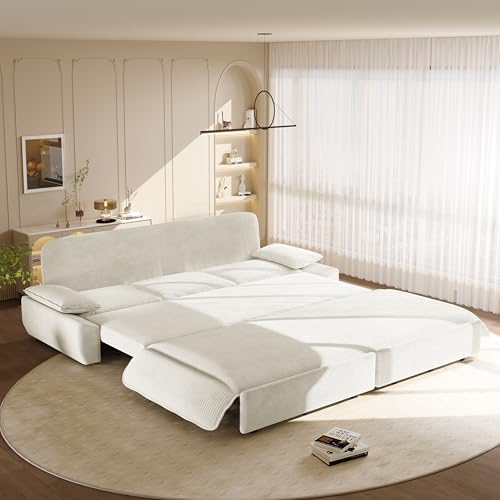
Sofa Beds for Every Night Use: Comfort That Lasts
A sofa bed used every night is no longer a temporary solution — it becomes your primary bed. This guide explains the frame, mattress, and mechanism standards that separate daily-use sleeper sofas from occasional guest furniture, so you can choose with confidence.
Why "Every Night Use" Changes Everything
Most sofa beds sold today are engineered for occasional guests — a few nights a year at most. When the same piece of furniture becomes your primary bed, the demands change dramatically. The mattress compresses nightly, the folding mechanism cycles hundreds of times per year, and the frame absorbs constant load instead of occasional load. A model that feels fine on the showroom floor can develop sagging, squeaking, or a jammed mechanism within months of daily use if it was never designed for that duty cycle.
This is why the category sofa beds for every night use exists as a distinct buying consideration. The difference is not cosmetic — it comes down to three engineering decisions: the density and thickness of the mattress, the material and bracing of the frame, and the load rating of the conversion mechanism. Get all three right and a sleeper sofa can serve as a comfortable, durable primary bed. Get any one wrong and you will feel it every morning.
Before diving into specifications, it helps to understand the broader category. If you are still exploring the full range of convertible furniture, our overview of sofa beds and the comparison of sofa beds and sleepers provide useful context on how pull-out, click-clack, and futon designs differ in daily-use suitability.
Mattress Standards for Daily Sleeping
The mattress is the single most important factor in whether a sleeper sofa is comfortable night after night. Standard sofa bed mattresses are often thin (around 4 to 5 inches) and built from low-density foam that bottoms out under sustained body weight. For daily use, look for a mattress that is at least 5 to 6 inches thick with a high-density foam core, pocket springs, or latex. These materials resist compression and retain their shape through repeated folding.
Mattress types ranked for nightly use
- High-density memory foam: Excellent pressure relief and motion isolation. Choose densities at the higher end of the range; low-density foam loses support quickly. Models with a memory foam mattress are a strong fit for side sleepers and couples.
- Pocket-spring or hybrid: The most bed-like feel, with better airflow and bounce than pure foam. Heavier and often found in premium and luxury sleeper sofas.
- Latex: Durable and responsive, naturally resistant to compression. Less common in sleeper sofas but excellent where available.
- Air mattress: Convenient and space-efficient, but air chambers and pumps are a weak point under daily use. Best treated as an occasional or short-term option rather than a nightly solution — see our notes on sofa beds with air mattress hide-a-beds for the trade-offs.
Firmness matters too. Medium-firm is the safest choice for nightly use because it supports the spine without creating pressure points, and it holds up better than soft foam over time. If you are a dedicated side sleeper, our guide to beds for side sleepers explains how to balance shoulder and hip support — the same principles apply to sleeper sofa mattresses. Stomach sleepers should prioritize a firmer surface to keep the hips from sinking; our stomach sleeper guide covers this in detail.
Questions to ask about the mattress
- Is the mattress removable and replaceable? A replaceable mattress extends the life of the entire sofa bed.
- What is the foam density or spring count? Higher density and higher spring counts generally indicate better durability.
- Does the mattress have a removable, washable cover? This matters enormously for a bed used every night.
- Is there a barrier between the mattress and the mechanism? A quality sleeper sofa includes a fabric deck to protect the mattress from metal bars.
Frame and Mechanism Durability
A nightly-use sleeper sofa lives and dies by its frame. Particleboard and thin MDF frames can handle occasional conversion, but under daily load they loosen, warp, and eventually fail at the joints. Look for kiln-dried hardwood or a reinforced hardwood-and-plywood composite, with corner blocks, dowels, and screws rather than staples alone. A solid build should feel heavy and should not rack or twist when you press on one corner.
What to check on the mechanism
- Load rating: Reputable manufacturers publish a weight capacity for the sleeping surface. A higher rating generally reflects heavier-gauge steel and better bracing.
- Steel gauge and finish: Thicker steel with a rust-proof finish resists flexing and corrosion over years of folding.
- Smooth operation: The mechanism should open and close with steady resistance — no binding, no sudden drops, no need to lift and shove.
- Locking positions: A positive lock in the open position prevents the bed from folding unexpectedly under movement during sleep.
- No bar-in-the-back design: Better mechanisms position the support bars so they do not press into the sleeper's back through the mattress.
If durability under frequent use is your top priority, the construction standards in our top-rated pull-out sofa beds guide are a useful benchmark. The same principles apply to sofa hide-a-beds, where the folding mechanism does most of the work and therefore takes most of the wear.
Sleeper Sofa Types Compared
Not every convertible design is equally suited to nightly sleeping. The table below compares the main types by how well they hold up as a primary bed.
| Type | Best For | Nightly-Use Suitability | Key Consideration |
|---|---|---|---|
| Pull-out sleeper | Primary bed in a living space | High — when built to premium or professional-grade standards | Mattress thickness and mechanism load rating |
| Click-clack | Occasional guests, compact rooms | Moderate — best with an upgraded topper | Thin seat cushion doubles as the sleep surface |
| Futon | Flexible seating and sleeping | Moderate to high — depends on mattress density | Choose high-density or latex fill over cotton batting |
| Murphy bed | Studios and multipurpose rooms | High — uses a full standard mattress | Wall installation and clearance requirements |
| Sleeper chair / twin | Single sleepers in small rooms | Moderate — check mattress length and thickness | Adult-length sleeping surface |
Pull-out sleepers with a dedicated mattress remain the closest thing to a real bed in convertible furniture, which is why they dominate the nightly-use category. If you are weighing a pull-out against a fixed-frame futon, our comparison of sofa beds and futons and the broader selection of sofa beds and futons will help you match the design to your routine. For rooms where the sofa also serves as the main seating, a sofa day bed can be a practical middle ground, and sofas that turn into beds covers the styling side of the decision.
Quality Tiers Explained
Sleeper sofas fall into recognizable market tiers. The descriptors below reflect relative position and construction quality, not any specific figure, and they are the most reliable way to compare models across retailers.
| Tier | Typical Construction | Best For |
|---|---|---|
| Entry-level | Thin foam mattress, lighter steel mechanism, softwood or composite frame | Guest rooms and occasional overnight use |
| Mid-range | High-density foam mattress, reinforced mechanism, hardwood-composite frame | Regular guests and part-time nightly use |
| Premium | Pocket-spring or hybrid mattress, heavy-gauge mechanism, kiln-dried hardwood frame | Every night use in a primary living space |
| Luxury / professional-grade | Replaceable hybrid mattress, commercial-grade mechanism, fully braced hardwood frame | Daily sleeping with long-term durability expectations |
For nightly use, mid-range is the practical floor and premium is the safer target. Entry-level models are a false economy for daily sleeping because the mattress and mechanism wear out first, often within the first year. Premium and professional-grade models cost more upfront but are efficient in the long run precisely because they do not need replacing. If comfort is your main worry, our guide to sofa beds comfortable to sleep on and the roundup of sofa beds that are actually comfortable translate these construction details into real-world feel.
Matching Size and Placement to Your Room
The most common mistake with nightly-use sofa beds is buying the largest model the room can hold while seated, without checking the footprint when the bed is open. A queen sleeper extends substantially into the room, and it needs clear space in front for the mechanism to deploy fully. Measure the open footprint, not just the closed one, and confirm the path from the doorway to the final position.
Size guidance
- Queen sleeper: The default choice for couples and adult nightly use. Requires the most open floor space.
- Full sleeper: A good fit for single adults or couples in tighter rooms, with slightly less open footprint.
- Twin sleeper and sleeper chairs: Best for single sleepers and small apartments; check that the sleeping length suits an adult.
In compact rooms, orientation matters as much as size. Placing the sofa perpendicular to the longest wall usually preserves the deployment zone. Our guides to sofa beds for small rooms and the wider collection of space-saving beds for small rooms cover layout options in detail. If the room also needs to function as a workspace or lounge, the strategies in our studio apartment guide help you zone a single room around a nightly bed. Storage integrated into the sofa — a common feature of storage beds — can also reduce the need for separate furniture.
Placement checklist
- Measure the open footprint and add clearance for walking around the bed.
- Confirm the mechanism deploys without hitting walls, radiators, or furniture.
- Check that the sofa's back height does not block windows or sightlines you rely on.
- Plan for bedding storage nearby — a smart bedside table or a solid wood bedside table with drawers keeps essentials within reach.
Long-Term Care and Maintenance
A nightly-use sleeper sofa rewards consistent, simple maintenance. Rotate and flip the mattress according to the manufacturer's schedule — every few months is typical for foam, less often for spring units. Vacuum the mattress surface and the mechanism cavity regularly to prevent dust and debris from binding the folding action. Lubricate moving joints only with the product the manufacturer specifies, and avoid household oils that attract grit.
Protect the mattress with a washable cover or protector, and wash bedding weekly as you would on any primary bed. When the sofa is not in bed mode, leave the mechanism fully closed rather than half-open, which stresses the frame. Inspect the frame joints and mechanism bolts once or twice a year and tighten anything that has worked loose. With this routine, a premium or professional-grade sleeper sofa can serve as a dependable primary bed for years.
If you are comparing care routines across bed types, the maintenance principles in our mattress care tips and when to replace a mattress guides apply directly to sleeper sofa mattresses as well.
Frequently Asked Questions
Can a sofa bed be used every night?
Yes, but only models designed for daily sleeping. Look for high-density foam or innerspring mattresses, a reinforced hardwood frame, and a mechanism rated for frequent use. Standard occasional-use sofa beds will break down quickly under nightly use.
What mattress type is best for nightly sofa bed use?
High-density memory foam, latex, or a pocket-spring mattress made specifically for sleeper sofas offer the best balance of support and durability for daily use. Thin air mattresses and low-density foam degrade quickly.
How long does a quality sofa bed last with daily use?
A premium or professional-grade sleeper sofa with a reinforced frame and high-density mattress can last several years of nightly use, while entry-level occasional models may show wear within months. Mechanism quality is the key differentiator.
What size sofa bed is best for every night sleeping?
Queen-size sleeper sofas are the most popular choice for nightly use because they provide adult-length sleeping space without dominating the room. Full-size models work well in tighter spaces, while twin sleeper chairs suit single sleepers in compact rooms.
Ready to Choose Your Nightly Sleeper Sofa?
Use the tiers and checklists above to shortlist models that match your space and sleeping habits, then compare the recommended options below. A well-specified sleeper sofa can be a genuine primary bed — not a compromise.
Explore Recommended Options