Upholstered Bunk Beds Full Over Full: The Complete Buying Guide
Discover how a full over full upholstered bunk bed can maximize space, elevate comfort, and bring a polished look to any bedroom — whether for kids, teens, or adults.
EXPLORE THE GUIDEWhy Choose an Upholstered Full Over Full Bunk Bed? These beds combine the space-saving genius of bunk beds with the soft, tailored look of upholstered furniture. Perfect for guest rooms, shared kids' rooms, vacation homes, or teen suites, they offer generous sleeping space on both levels without overwhelming the room. This guide covers everything you need to choose wisely, from frame construction and safety features to fabric options and layout considerations.
What Is an Upholstered Full Over Full Bunk Bed?
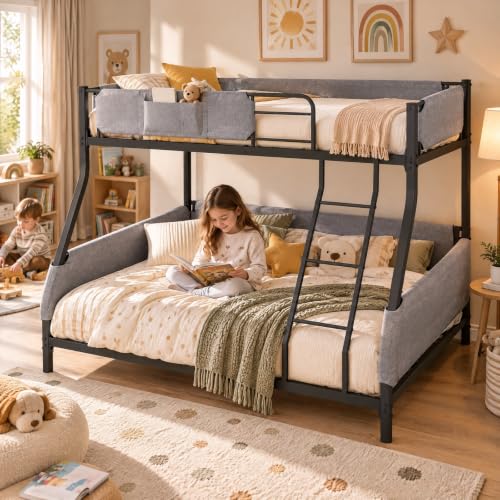
An upholstered bunk bed full over full features two full-size sleeping surfaces stacked vertically. Unlike metal or wood bunk beds, the frame — particularly the guardrails, headboards, and footboards — is wrapped in fabric such as linen, velvet, microfiber, or faux leather over foam padding. This creates a soft, furniture-like appearance that blends beautifully with modern, transitional, and classic bedroom styles.
Full over full configurations are especially popular because each sleeper gets a spacious full-size mattress (typically 54" wide by 75" long), making them suitable for older children, teenagers, and even adults. The lower bunk often sits close to the floor for easy access, while the upper bunk includes a sturdy guardrail for safety.
Key Benefits of Upholstered Full Over Full Bunk Beds
Space Efficiency
Two full-size beds occupy the footprint of one. Ideal for rooms where floor space is limited but sleeping capacity needs to be high.
Comfort & Warmth
Padded upholstery adds a layer of softness and warmth, reducing the industrial feel of metal frames and creating a cozy atmosphere.
Design Versatility
Available in a wide range of fabrics and colors — from neutral linens to rich velvets — so you can match your existing bedroom decor.
Noise Reduction
Upholstered frames tend to dampen sound better than bare metal or wood, reducing creaks and rattles during the night.
Safety Padding
Fabric-wrapped rails and edges provide a softer surface, which is especially reassuring in households with active children.
Sturdy Construction
Most quality models use solid wood or engineered wood frames beneath the upholstery, supporting the weight of two full-size mattresses and sleepers.
What to Look For When Buying
Before you commit to a model, evaluate these critical factors to ensure the bed suits your room, your sleepers, and your long-term needs.
1. Frame Material & Construction
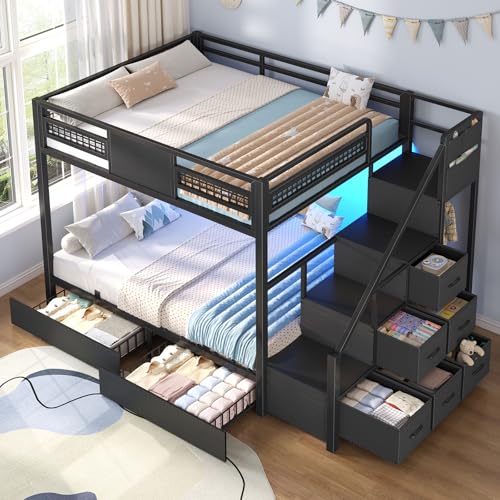
The upholstery hides the frame, so check the product specifications carefully. Look for solid wood or high-grade engineered wood (plywood, MDF) rather than particleboard. Reinforced slat systems — preferably with center support legs — are essential for full-size mattresses, which are heavier and require more support than twin sizes. Heavy-duty models often include metal-to-metal connections and thicker rails. If you need extra strength, consider a heavy-duty bunk bed with storage that is rated for higher weight capacities.
2. Safety Features
Safety is non-negotiable for bunk beds. Ensure the upper bunk has a full-length guardrail on both sides (or a guardrail plus a wall-side rail) with a secure attachment. The ladder should be wide, grooved, and firmly hooked or bolted to the frame. Check that the bed meets current safety standards (such as ASTM F1427 in the US). For households with young children, consider a low-profile bunk bed which reduces the height of the upper tier and makes climbing safer.
3. Upholstery Fabric & Maintenance
Different fabrics offer different benefits:
- Linen & cotton blends: Breathable, classic look, but may stain more easily.
- Microfiber: Durable, easy to clean, and resistant to everyday wear — a practical choice for kids' rooms.
- Velvet: Luxurious and soft, but requires more careful maintenance and may attract dust.
- Faux leather: Wipe-clean surface, modern aesthetic, and very durable — ideal for high-traffic rooms.
Look for removable, washable covers if available, or plan to spot-clean regularly. A fabric protector spray can extend the life of the upholstery.
4. Mattress Compatibility
Full-size mattresses (54" × 75") are required for both bunks. For the upper bunk, choose a mattress that is no more than 6–8 inches thick to ensure the guardrail remains effective. Innerspring, hybrid, or firm foam mattresses work well; avoid overly soft mattresses on the top bunk for safety reasons. Also confirm the bed's weight capacity per bunk — quality models typically support 200–400 lbs per sleeping surface.
5. Room Layout & Ceiling Height
Measure your ceiling height before purchasing. You need enough clearance above the upper bunk for a person to sit up comfortably — typically at least 30–36 inches between the top mattress and the ceiling. Also account for the ladder footprint and space to move around the bed. If your room has low ceilings, explore bunk beds designed for low ceilings.
6. Assembly & Delivery
Upholstered bunk beds are substantial pieces of furniture and usually ship in multiple boxes. Check whether assembly is required, whether tools are included, and whether the manufacturer offers in-home delivery or assembly services. Reading customer reviews about assembly difficulty can save you hours of frustration.
Market Tiers: Entry-Level vs. Mid-Range vs. Premium
Upholstered bunk beds fall into distinct quality tiers. Use this table to align your expectations with the tier you are considering. Remember that higher tiers generally offer sturdier frames, better upholstery, and more refined details.
| Tier | Frame & Construction | Upholstery | Best For |
|---|---|---|---|
| Entry-Level | Engineered wood with basic slats; may lack center support. | Standard microfiber or polyester blend; limited color options. | Guest rooms, vacation homes, or light-use kids' rooms. |
| Mid-Range | Solid wood or plywood frame with reinforced slats and center legs. | Higher-quality linen blends, velvet, or faux leather; more color choices. | Primary kids' or teens' rooms with daily use. |
| Premium | Hardwood frame, metal-to-metal joinery, commercial-grade slat system. | Premium fabrics (performance velvet, stain-resistant linen), detailed stitching. | Master suites, adult guest rooms, or long-term investment. |
Pros and Cons at a Glance
Advantages
- Sleeps two in the footprint of one full bed
- Soft, furniture-grade look elevates room decor
- Quieter than metal bunk beds
- Padded rails add a layer of safety
- Available in many fabric and color options
- Generous full-size sleeping surface on both levels
Considerations
- Heavier and bulkier than metal or simple wood bunks
- Upholstery requires periodic cleaning and care
- Higher tiers can be a significant investment
- Requires adequate ceiling height for the upper bunk
- Assembly can be time-consuming
Who Should Consider a Full Over Full Upholstered Bunk Bed?
This configuration works beautifully across many scenarios:
- Families with two children sharing a room: Full-size bunks give each child ample space to stretch out, unlike twin bunks which can feel cramped for older kids.
- Teenagers: The full-size surface accommodates growing bodies, and the upholstered look feels more mature than a traditional metal frame.
- Guest rooms: Host two guests comfortably without dedicating an entire room to two separate beds.
- Vacation homes and cabins: Maximize sleeping capacity in a compact footprint while maintaining a cozy, welcoming aesthetic.
- Adults in small apartments: A stylish upholstered bunk bed can serve as a space-saving solution for roommates or couples who prefer separate sleeping surfaces.
If you are specifically looking for beds that can accommodate adults, explore queen-size bunk beds for adults or custom-made adult bunk beds for larger options.
Styling and Placement Tips
An upholstered bunk bed can be the centerpiece of the room if styled thoughtfully. Here are a few practical ideas:
- Choose a neutral fabric (beige, grey, navy, or cream) to keep the room feeling open and allow bedding colors to pop.
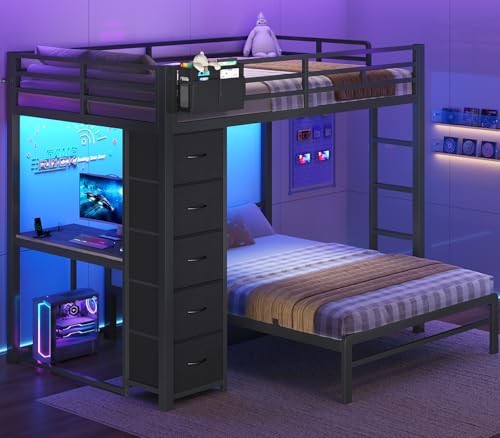
- Use the space under the lower bunk for storage bins, a small reading nook, or a bunk bed with a built-in dresser for added functionality.
- Add a bedroom rug to define the sleeping zone and soften the acoustics in the room.
- Place the bed perpendicular to the window to avoid drafts and glare, and ensure the ladder side has clear access.
- Keep the upper bunk clear of heavy decor and ensure no ceiling fans or light fixtures hang too close to the top sleeping area.
Common Mistakes to Avoid
Ignoring ceiling height
Measure the distance from the floor to the ceiling, then subtract the bed height and mattress thickness. If the remaining space above the top mattress is less than 30 inches, the upper bunk will feel cramped and unsafe.
Using the wrong mattress thickness on the top bunk
A mattress that is too thick can render the guardrail ineffective. Stick to the manufacturer's recommended maximum thickness, usually 6–8 inches.
Skipping the center support check
Full-size mattresses are heavy. A bunk bed without center support legs or a reinforced slat system may sag over time. Always confirm the slat count and support structure.
Placing the bed against a heating source
Upholstered fabric can be sensitive to prolonged heat. Keep the bed away from radiators, space heaters, and direct sunlight to prevent fabric damage or fading.
Frequently Asked Questions
Is a full over full bunk bed suitable for adults?
Yes, many full over full upholstered bunk beds are designed to support adults. Check the weight capacity — quality models support 200–400 lbs per bunk. However, adults may prefer a queen-size bunk bed for even more sleeping space.
Can the bunks be separated into two freestanding beds?
Some models offer a "separates into two beds" feature, but most upholstered full over full bunk beds are designed as a single unit. If separation is important, look specifically for convertible models or explore bunk beds that separate into twin beds (note: most of these are twin-size, not full).
How do I clean upholstered bunk beds?
Vacuum the fabric regularly with a soft brush attachment. For stains, use a mild upholstery cleaner and blot — never rub — the affected area. Check the manufacturer's care instructions for specific fabric recommendations. Faux leather can usually be wiped with a damp cloth.
What mattress thickness is best for the top bunk?
Most manufacturers recommend a mattress no thicker than 6–8 inches for the upper bunk to maintain the effectiveness of the guardrail. For the lower bunk, you can use a standard full-size mattress of any comfortable thickness.
Do I need a box spring with an upholstered bunk bed?
No. Most upholstered bunk beds include a slat system that supports the mattress directly. Adding a box spring would raise the mattress height and may compromise guardrail safety on the top bunk.
How much space do I need around the bed?
Allow at least 24–30 inches of clearance on the ladder side and ideally 18–24 inches on the other sides for easy movement and bed-making. Also factor in ceiling height for the top bunk.
Ready to Find Your Perfect Upholstered Full Over Full Bunk Bed?
Browse our curated selection of top-rated models — from entry-level options to premium hardwood frames — and compare features side by side.
View Recommended ModelsFinal Thoughts
An upholstered full over full bunk bed is a smart, stylish solution for maximizing sleeping space without sacrificing comfort or design. By focusing on frame construction, safety features, fabric choice, and room dimensions, you can select a bed that will serve your household well for years. Whether you are furnishing a kids' room, a guest suite, or a vacation property, this guide gives you the foundation to make an informed decision.
For further reading, explore our guides on twin over twin bunk beds, twin over full bunk beds, and modern full over full bunk beds to compare configurations. And before you buy, check our mattress replacement guide to ensure your new bunk bed gets the best sleep surface possible.