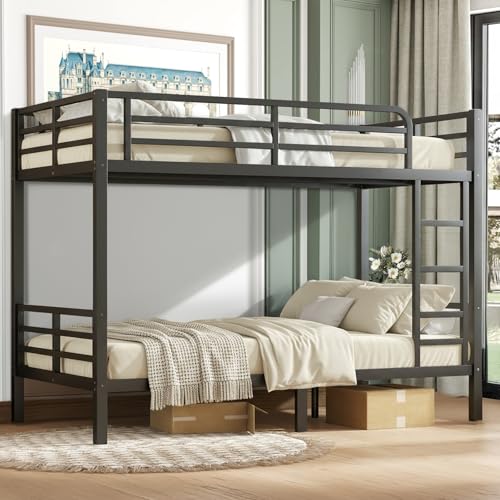
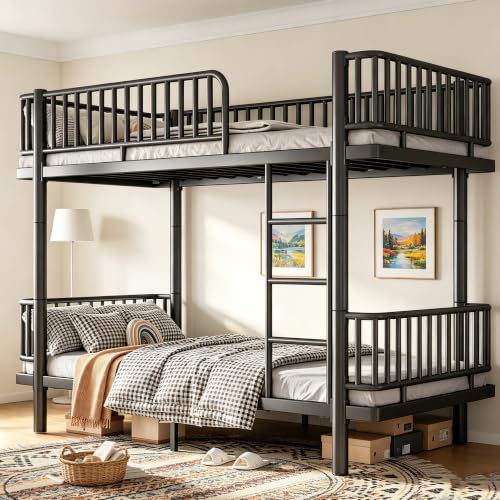
Bunk Beds Twin XL Over Twin XL: The Complete Guide
Everything you need to know about extra-long bunk beds — sizing, safety, frame types, and setup tips for the perfect shared sleeping space.
START YOUR RESEARCHWhy Twin XL over Twin XL bunk beds? Twin XL mattresses measure 38 inches wide by 80 inches long — five inches longer than a standard twin. A twin XL over twin XL bunk bed gives taller sleepers, teens, and adults the legroom they need without sacrificing floor space. It's the ideal solution for guest rooms, dormitories, vacation homes, and shared bedrooms where comfort and efficiency must coexist.
What Exactly Is a Twin XL Over Twin XL Bunk Bed?
A twin XL over twin XL bunk bed is a stacked sleeping arrangement where two extra-long twin mattresses are positioned one above the other. Each sleeping surface accommodates a mattress measuring 38 inches wide by 80 inches long. Compared to a standard twin over twin bunk bed, the extra length makes these bunks suitable for adults up to about six feet four inches tall — a significant upgrade for anyone who has outgrown a traditional twin.
These bunk beds come in a variety of frame styles, from solid wood constructions to heavy-duty metal frames. Many models feature built-in ladders, guard rails, and slat systems that support mattresses without a box spring. The extra-long format has become especially popular in college dorms, beach houses, and multi-generational homes where sleeping space is at a premium.
Twin XL Dimensions and What They Mean for Your Room
Before committing to any bunk bed, measure your room carefully. The table below outlines the key dimensions you'll need to consider.
| Dimension | Measurement | Why It Matters |
|---|---|---|
| Mattress Size | 38" W x 80" L | Fits extra-long sheets and bedding sets |
| Total Bed Length | 82" – 86" | Frame adds 2–6 inches beyond mattress length |
| Total Bed Width | 40" – 44" | Allow clearance for nightstands and walking paths |
| Recommended Ceiling Height | 96" (8 ft) minimum | Ensures comfortable headroom for the top sleeper |
| Top Bunk Guard Rail Height | 5" minimum above mattress | Safety requirement for upper sleepers |
If your ceiling is lower than eight feet, consider a bunk bed designed for 8-foot ceilings or explore low-ceiling bunk options that reduce the gap between tiers without compromising the lower sleeping area.
Frame Types and Quality Tiers
The frame you choose determines durability, safety, and how well the bed ages. Here's how the major categories break down, using a consistent tier system to help you compare options on an even playing field.
| Frame Type | Tier | Best For |
|---|---|---|
| Steel Tubular Frame | Entry-Level | Guest rooms, light use, quick assembly |
| Reinforced Metal with Slats | Mid-Range | Teens, daily use, sturdy support |
| Solid Wood (Pine or Oak) | Premium | Long-term use, aesthetic appeal, adult sleepers |
| Hardwood with Stair Storage | Luxury | Primary residences, built-in storage, commercial-grade durability |
Entry-level frames typically use thinner gauge steel and are suitable for lighter sleepers or occasional use. Mid-range models add reinforced corner brackets and wider slats. Premium solid wood frames — often in finishes like solid wood twin-over-full configurations — offer the most stability for adult sleepers and hold their appearance longer. Luxury-tier models frequently incorporate stairs with built-in drawers, making them a worthwhile long-term investment for families.
Advantages and Trade-Offs of Twin XL Bunks
✓ Advantages
- Extra five inches of length accommodate taller sleepers
- Footprint is barely larger than a standard twin bunk
- Fits standard twin XL bedding and mattress protectors
- Ideal for dorms, guest rooms, and vacation properties
- Available in metal, wood, and upholstered styles
✗ Trade-Offs
- Requires twin XL sheets — standard twin sheets won't fit
- Heavier frames may need two people for assembly
- Ceiling height must be verified before purchase
- Top bunk access requires a sturdy ladder or stairs
Buying Checklist: What to Verify Before You Commit
Use this checklist to evaluate any twin XL over twin XL bunk bed you're considering. Each point addresses a common source of buyer regret.
- Weight capacity per bunk: Confirm the frame's rated capacity meets or exceeds the weight of the intended sleeper. Adult-capable models should be explicitly rated for adult use.
- Guard rail height: The top bunk should have guard rails at least five inches above the mattress surface on all open sides.
- Ladder attachment: Look for ladders that hook securely over the frame or bolt directly to it — not models that simply lean.
- Slat spacing: Slats should be no more than 3.5 inches apart to properly support a mattress without a box spring.
- Assembly hardware: Check that the frame uses locking nuts, not just screws, and that all tools are included.
- Mattress thickness compatibility: Some frames specify a maximum mattress height for the top bunk to keep guard rails effective. Verify this before buying a thick mattress.
- Return policy and warranty: Confirm the warranty covers frame defects and that the return window is reasonable.
If you're comparing this configuration against other layouts, our twin-over-twin adult bunk guide and the broader bunk bed buying guide provide additional context on weight ratings and frame construction.
Room Setup and Safety Tips
Proper placement makes the difference between a bunk bed that feels like a clever space-saver and one that feels cramped. Follow these guidelines:
- Position the bed away from ceiling fans and light fixtures — the top sleeper needs clearance to sit up safely.
- Leave at least 30 inches of walking space beside the ladder for safe entry and exit.
- Anchor the frame to the wall if the manufacturer provides anti-tip hardware. This is especially important in homes with children.
- Use a bunk bed sized for small rooms if floor space is tight; the twin XL footprint is narrow enough for most layouts.
- Pair the bed with blackout curtains to improve sleep quality in shared rooms.
- Add a body pillow or supportive bed pillow for extra comfort on the lower bunk.
Choosing the Right Twin XL Mattress
The mattress you pair with your bunk bed affects both comfort and safety. For the top bunk, choose a mattress no thicker than six to eight inches so the guard rails remain effective. Memory foam and hybrid models work well because they conform to the sleeper without requiring a box spring. If you're shopping on a tighter budget, our budget mattress guide outlines what to look for at each tier without compromising support.
For the bottom bunk, you have more flexibility — a thicker mattress with added cushioning is fine as long as it fits within the frame. Avoid mattresses that exceed the frame's specified maximum height, as they can interfere with the upper bunk's support structure.
Frequently Asked Questions
Can adults sleep on twin XL over twin XL bunk beds?
Yes — provided the frame is rated for adult weight. Many twin XL bunk beds are engineered with reinforced steel or solid hardwood and support up to 400 pounds per bunk. Always check the manufacturer's weight rating before purchase. Our guide to bunk beds that hold adults covers this in more detail.
What sheets fit a twin XL over twin XL bunk bed?
You need twin XL sheet sets (38" x 80"). Standard twin sheets (38" x 75") will not fit properly and can pull loose. Look for deep-pocket sheets if your mattress is thicker than eight inches.
Do I need a box spring for a bunk bed?
Most modern bunk beds use a slat system that supports the mattress directly — no box spring required. In fact, adding a box spring to the top bunk can raise the mattress above the guard rails, creating a safety hazard. Check your frame's instructions.
How much clearance is needed above the top bunk?
Aim for at least 30 to 36 inches between the top mattress surface and the ceiling. This allows an adult to sit up comfortably without hitting their head. If your ceiling is lower, consider a bunk bed for sloped ceilings or a low-profile design.
Can twin XL bunk beds be separated into two beds?
Some models are designed to split into two freestanding twin XL beds. Look for frames explicitly marketed as convertible or separable. Our guide to bunk beds that separate into single beds lists the key features to look for.
Are twin XL bunk beds safe for children?
They can be, but the American Academy of Pediatrics recommends that children under six not sleep on the top bunk. For younger children, consider a bunk bed designed for kids with lower overall height and full-length guard rails on both sides.
Final Verdict: Is a Twin XL Over Twin XL Bunk Bed Right for You?
If you need to sleep two people in a compact footprint and either sleeper is taller than average, a twin XL over twin XL bunk bed is the most space-efficient solution available. It offers the length of a full-size bed in the width of a twin, making it ideal for guest rooms, dorms, cabins, and shared bedrooms. Prioritize a frame with a verified adult weight rating, secure guard rails, and a ladder that attaches firmly to the structure. With the right mattress pairing and a few setup precautions, this configuration delivers years of comfortable, space-smart sleep.
For more guidance on bunk bed configurations — including twin-over-full, full-over-queen, and storage-equipped models — explore our related buying guides.