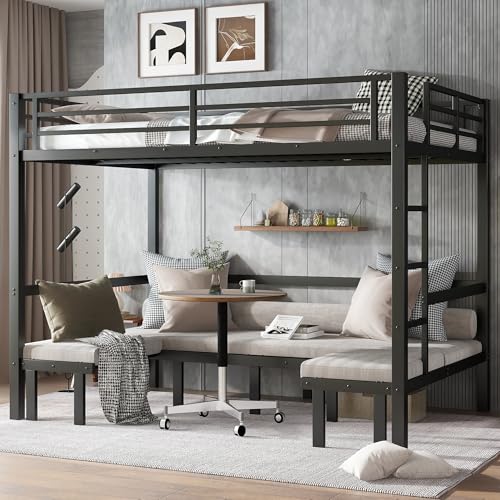
Bunk Beds with Futon on Bottom: The Complete Buying Guide
Turn one compact footprint into a sleeping area, a lounge, and a guest-ready space. Learn how futon bunk beds work, what to check before buying, and which configuration fits your room.
EXPLORE TOP PICKSWhy this design works: A bunk bed with a futon on the bottom pairs an elevated sleeping platform with a convertible sofa-sleeper below. For a teen bedroom, a guest room, or a vacation cabin, it delivers two functions in the footprint of a single bed — without sacrificing comfort or structural integrity.
What Exactly Is a Bunk Bed with a Futon on the Bottom?
A bunk bed with a futon on the bottom is a two-level sleep structure. The upper tier is a traditional bunk platform designed for a standard mattress, usually a twin. The lower tier replaces the conventional bottom bunk with a futon frame that converts between a seated sofa position and a flat sleeping position. The result is a piece of furniture that behaves like a bedroom set and a living-room piece at the same time.
This hybrid design sits within the broader family of bunk beds, but it solves a specific problem: rooms that need to host both daytime activity and overnight guests. Instead of dedicating floor space to a sofa and a separate bed, you consolidate both into one vertical footprint. That is why futon bunk beds are common in teen bedrooms, college apartments, guest rooms, and small cabins.
Most models follow a twin-over-full configuration, meaning a twin mattress on top and a full-size futon below. Some manufacturers offer a twin-over-twin futon layout for tighter spaces. Before committing, confirm the futon frame's folded and flat dimensions, because a full futon requires more depth than a standard bunk mattress.
If you are still deciding between hybrid and conventional layouts, it helps to compare this design with other space-saving options such as bunk beds with a sofa bed underneath and bunk beds with a pull-out bed underneath. Each solves the same problem with a different mechanism.
Key Benefits of a Futon Bunk Bed
Dual-Purpose Footprint
One structure provides an upper sleeping platform and a lower seating area that converts to a sleeper. Ideal for rooms where floor space is limited.
Guest-Ready Flexibility
The futon opens flat for overnight guests, then returns to sofa mode during the day. No separate guest bed is required.
Teen and Dorm Friendly
Older children and young adults appreciate having a lounge zone in their own room. It supports studying, gaming, and hosting friends.
Vertical Storage Potential
Many frames include under-futon clearance or built-in drawers. Compare bunk beds with storage underneath if organization is a priority.
Strong Resale and Reuse
A well-built futon bunk bed adapts as needs change — from a child's room to a guest room to a cabin or rental property.
Defined Sleep and Living Zones
The elevated bunk creates a visual separation between rest and recreation, which supports better sleep hygiene in shared rooms.
Frame Types and Construction Materials
Construction quality separates a futon bunk bed that lasts a decade from one that loosens within a year. Three material families dominate the market, and each has a distinct position.
Metal Frames
Metal futon bunk beds use high-grade steel tubing or square stock, often with a powder-coated, rust-proof finish. They tend to be lighter than wood, easier to disassemble, and efficient to move. Entry-level metal frames are common, while mid-range and premium models add thicker gauge steel, reinforced corner brackets, and wider ladder rungs. Metal is a solid choice when durability and simple maintenance matter more than decorative style.
Wood Frames
Wooden futon bunk beds range from painted pine to solid hardwood. Entry-level models often use engineered wood with a veneer, while high-end tier frames use solid oak, maple, or rubberwood with mortise-and-tenon joinery. Wood blends naturally with bedroom decor and can be refinished. Check the weight rating and the joinery method — screwed-and-glued butt joints are weaker than reinforced brackets or through-bolts.
Upholstered and Mixed-Material Frames
Some premium designs wrap the futon frame in fabric or faux leather, creating a more finished sofa look. These models often combine a metal inner frame with padded panels. They suit living-room-adjacent guest spaces where the futon is visible during the day. Maintenance is higher, but the visual payoff is significant.
For buyers who want a purely functional lower level, it is also worth reviewing bunk beds with seating underneath as a comparison point. And if the upper bunk needs to accommodate two sleepers, compare bunk beds with two full-size beds before finalizing the layout.
Mattress and Futon Compatibility: What to Check
The upper bunk and the lower futon have different mattress requirements, and mismatching them is the most common buying mistake.
Upper bunk: Use a standard twin mattress that matches the frame's specified thickness range. A mattress that is too thick can push above the guardrail and reduce safety. A mattress that is too thin may leave gaps at the frame edge. Innerspring, hybrid, and memory foam twins all work if the height is within spec.
Lower futon: Futon mattresses are measured by thickness and fill. Cotton, foam, and innerspring futons each fold differently. A thick, firm futon may not fold cleanly into the sofa position, while an overly soft futon can bottom out when used as a bed. Follow the manufacturer's recommended thickness — typically in the range that allows the frame to lock in both positions.
If you prefer to buy the frame and mattress together, compare bunk beds with mattress included and bunk beds with mattresses. Those pages explain bundled versus separate purchasing and help you avoid a size mismatch. For rooms where the lower level must also serve as a dedicated sleeper rather than a convertible sofa, bunk beds with full size on bottom may be a better structural fit.
Typical Futon Bunk Bed Configurations
| Configuration | Upper Level | Lower Level | Best For |
|---|---|---|---|
| Twin-over-full futon | Twin mattress | Full futon (sofa + sleeper) | Teen bedrooms, guest rooms, small apartments |
| Twin-over-twin futon | Twin mattress | Twin futon (compact sofa + sleeper) | Tight rooms, children's bedrooms |
| Full-over-full futon | Full mattress | Full futon | Adults, couples hosting guests, cabins |
| Futon bunk with storage | Twin or full mattress | Futon + drawers or under-bed clearance | Rooms with limited closet space |
| Futon bunk with stairs | Twin or full mattress | Futon + stepped access | Younger users, safer upper access |
Configuration choice should follow the room, not the other way around. Measure ceiling height, door swing, and window clearance before ordering. If the lower level must fold out in front of the frame, leave enough clearance for the futon to lie flat without blocking a doorway.
Safety Standards and Setup Checklist
Futon bunk beds combine two structures that each carry safety requirements. Before purchase, verify the following:
- Upper bunk guardrails: Full-length rails on both sides, with no gap wider than the frame specification. Rails should be secured, not merely resting in place.
- Ladder attachment: The ladder must hook or bolt to the frame and sit flush against it. A loose ladder is a fall risk. Compare bunk beds with ladder for mounting styles.
- Weight rating: Confirm the upper bunk and the futon frame each have a stated weight limit that matches the intended users. High-end tier and commercial-grade frames publish higher limits.
- Futon locking mechanism: The futon frame should lock securely in the flat position and in the seated position. Test this during assembly.
- Wall anchoring: Many manufacturers recommend anchoring the frame to a wall stud to prevent tipping. Follow the instructions exactly.
- Age guidance: Most safety guidance recommends the upper bunk for children aged six and older. The lower futon is not a crib substitute.
- Mattress fit: No gaps larger than the frame's specified tolerance between mattress and rail. A loose mattress undermines the guardrail.
Rooms with ceiling fans, low ceilings, or sloped ceilings require extra clearance checks. The upper sleeper needs enough headroom to sit up without contact.
Who Should Choose a Futon Bunk Bed?
This design is not universal. It performs best in specific contexts and less well in others. Use the following guidance to decide.
Strong Fits
- Teen bedrooms: The futon gives teens a lounge zone for friends, gaming, and studying without adding a separate sofa.
- Guest rooms: The room stays usable during the day and converts to a sleeping space for visitors at night.
- Vacation cabins and rental properties: One frame serves two functions, which simplifies furnishing and reduces the number of items that need maintenance.
- Small apartments: A studio or one-bedroom unit gains a distinct living area without losing sleeping capacity.
- Dorm and shared housing: The futon creates a shared social space while preserving private sleeping space above.
Weaker Fits
- Toddler and preschool rooms: The upper bunk is not appropriate for very young children, and the futon is not designed as a primary bed for them.
- Rooms requiring two full-time adult beds: A twin upper bunk suits one sleeper. Consider bunk beds with full on top and bottom instead.
- Very low ceilings: Headroom above the upper bunk is a hard constraint that cannot be adjusted after purchase.
- Buyers who need a traditional sofa: A futon is a convertible, not a plush living-room couch. If seating comfort is the primary goal, a dedicated sofa plus a separate bed may serve better.
Compare Futon Bunk Bed Options
Browse curated futon bunk bed listings with verified dimensions, weight ratings, and configuration details.
VIEW RECOMMENDED MODELSAssembly, Maintenance, and Long-Term Care
Assembly difficulty varies by frame material and tier. Entry-level flat-pack models typically take two adults two to three hours. Premium models with pre-assembled sub-frames can take less. Always assemble on a soft surface to protect flooring and finish, and tighten all bolts in stages rather than fully tightening one corner at a time.
Ongoing care extends the life of the frame:
- Re-tighten bolts every few months, especially on metal frames used daily as a sofa.
- Rotate and flip the futon mattress periodically to prevent compression on one side.
- Keep the futon frame's pivot points clean and lightly lubricated if the manufacturer permits.
- Inspect guardrails and ladder hardware after any move or rearrangement.
- Use a mattress protector on both levels to reduce wear and simplify cleaning.
If you need additional sleeping flexibility beyond the futon, compare bunk beds with trundle underneath and bunk beds with third bed underneath. Those designs add a third sleeper without changing the upper bunk configuration.
How Futon Bunk Beds Compare to Other Space-Saving Designs
The market offers several ways to combine sleeping and living space. Understanding the trade-offs helps you choose the right mechanism.
- Futon bunk bed: Best when the lower level must switch between sofa and sleeper frequently. The conversion is manual and requires clearance in front of the frame.
- Sofa bed underneath: Similar concept, but the lower unit is a dedicated sofa bed rather than a futon. See bunk beds with sofa bed underneath for the comparison.
- Pull-out bed underneath: Adds a third sleeping surface without a sofa function. See bunk beds with pull-out bed underneath.
- Desk underneath: Prioritizes study or work space over lounge seating. See bunk beds with desk.
- Full bed on bottom: Prioritizes a permanent full-size sleeper over convertible seating. See bunk beds with full on bottom and twin on top.
For buyers furnishing an entire room, the buying guides and reviews section covers coordinated furniture, bedding, and storage decisions.
Frequently Asked Questions
What is a bunk bed with a futon on the bottom?
A bunk bed with a futon on the bottom is a dual-purpose sleeping structure where the upper level holds a standard twin or full mattress, and the lower level features a convertible futon that serves as both a sofa during the day and a sleeper at night. This design maximizes floor space and adds lounge seating to compact rooms.
What mattress size fits a futon bunk bed?
Most futon bunk beds pair a twin-size upper bunk with a full-size futon on the lower level. Some models use a twin futon below. Always confirm the manufacturer's specified mattress dimensions, because futon thickness and fill type affect how the frame folds and locks into position.
Are futon bunk beds safe for children?
Yes, when they meet current safety standards. Look for full-length guardrails on the upper bunk, a secure ladder attachment, and a sturdy frame rated for the intended user weight. Futon bunk beds are generally recommended for children aged six and older, and the lower futon should not be used by very young children without supervision.
Can adults use a futon bunk bed?
Many high-end tier and commercial-grade futon bunk beds support adult weight limits on both levels. However, the upper bunk is usually a twin, which suits one adult sleeper. Adults seeking full-size sleeping space on both levels should compare this design with bunk beds with full on top and bottom.
How much space does a futon bunk bed save?
A futon bunk bed consolidates a sleeping area and a seating area into a single footprint. In a small guest room or teen bedroom, this typically replaces a separate sofa and bed, freeing floor space for storage, a desk, or circulation. The exact footprint depends on the frame dimensions and whether the futon folds flat or upright.
Do futon bunk beds require assembly?
Most futon bunk beds ship flat-packed and require assembly with basic tools. Mid-range and premium models often include labeled hardware, pre-drilled holes, and step-by-step instructions. Allow two adults roughly two to three hours for a standard twin-over-full futon bunk bed.
Final Buying Checklist
Before you finalize a choice, confirm the following in writing on the product page or by contacting the seller:
- Upper bunk mattress size and maximum thickness.
- Futon mattress size and recommended fill or thickness range.
- Weight rating for each level.
- Guardrail height and ladder mounting method.
- Folded and flat depth of the futon frame.
- Ceiling clearance needed above the upper bunk.
- Wall-anchoring requirement.
- Assembly time and tools required.
With those details verified, a futon bunk bed becomes a long-term investment rather than a compromise. It gives a compact room two distinct functions, supports guests without a dedicated guest room, and adapts as a household's needs change.