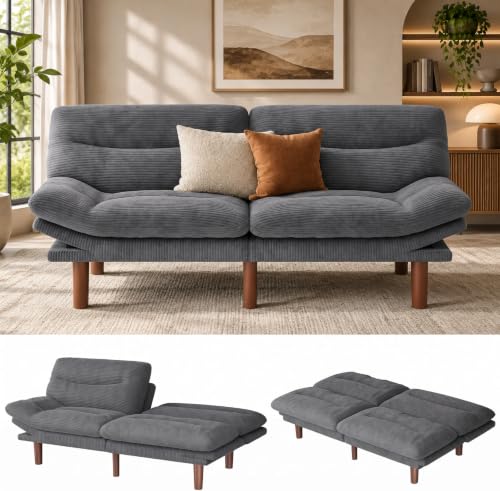
Futons Buying Guide: Styles, Frames & Comfort Tips
Learn how to choose a futon that works as a sofa by day and a bed by night. Compare frame types, mattress constructions, and room setups for small spaces, guest rooms, and multifunctional living areas.
START THE GUIDEWhy futons matter: A futon is one of the most space-efficient furniture pieces you can own. It serves as seating, lounging, and sleeping space without the footprint of two separate items. This guide helps you understand the trade-offs so you can pick a model that fits your room, your guests, and your daily routine.
What Is a Futon and Who Is It For?
A futon is a convertible piece of furniture that transitions between a seated position and a flat sleeping surface. Traditional Japanese futons are floor-level bedding, but the modern Western futon is a frame-and-mattress system that functions like a sofa, lounger, and guest bed. This versatility makes futons especially useful in apartments, home offices, studios, and rooms that need to serve more than one purpose.
Futons are a strong fit for people who host occasional overnight guests, want a secondary seating area in a bedroom, or need to furnish a small living space without overcrowding it. They are less ideal for people who need a dedicated, hotel-quality mattress every night, because most futon mattresses prioritize foldability over deep contouring support. Understanding this trade-off early will save you from disappointment later.
If you are comparing futons with other convertible options, it helps to look at the broader category of guest beds and guest room beds for small spaces to see how futons stack up against sofa beds, trundles, and fold-away designs.
Futon Frames: The Foundation of Comfort
The frame determines how stable the futon feels, how easily it converts, and how long it lasts. Frame construction is arguably more important than the mattress for the overall experience, because a weak frame will wobble, squeak, and eventually fail regardless of the mattress quality.
Wood frames are the most common choice for living spaces. Hardwood frames made from oak, maple, or ash offer the best balance of strength and visual warmth, while softer woods like pine are lighter and easier to move but can develop creaks over time. Look for reinforced joints, corner blocks, and a finish that resists moisture. A well-built wooden frame can last many years and blends naturally with green beds and other natural-toned bedroom schemes.
Metal frames are typically more robust for heavy daily use. High-grade steel frames with a rust-proof finish are common in heavy-duty bed frames and are a smart choice for guest rooms, rental properties, and households with children. Metal frames often convert more smoothly because the hinge mechanism is simpler and less prone to wood-on-wood friction.
Armless, loveseat, and full-size frames cover the main size categories. Armless frames are the most compact and work well against a wall, while loveseat frames add side support for sitting. Full-size futon frames are the best compromise for adult guests because they provide a wider sleeping surface. If you are specifically shopping for a full-size model, browse futon beds for sale and compare frame dimensions against your room layout before committing.
Futon Mattress Types Compared
Futon mattresses are built differently from standard mattresses. They are designed to fold repeatedly without breaking down, which means they use denser foam layers, cotton batting, or a combination of both. The three main constructions you will encounter are foam, innerspring, and cotton-wrapped foam.
| Mattress Type | Best For | Comfort Feel | Durability Tier |
|---|---|---|---|
| Foam futon mattress | Daily seating and occasional sleeping | Firm, supportive, less contouring | Entry-level to mid-range |
| Innerspring futon mattress | Guests who prefer a traditional mattress feel | Bouncier, more breathable | Mid-range to premium |
| Cotton-wrapped foam | Long-term use with frequent conversion | Balanced, dense, holds shape well | Premium to luxury |
| Memory foam futon mattress | Lounging and short naps | Soft, pressure-relieving, slower response | Mid-tier to high-end tier |
Thickness matters more than most buyers expect. Futon mattresses typically range from about six to ten inches. Thinner mattresses fold more easily and suit armless frames, while thicker mattresses feel more like a conventional bed but require a frame with a wider deck and stronger hinge. If you plan to sleep on the futon regularly, lean toward the thicker end of the range and confirm the frame supports it.
For a deeper comparison of foam-based sleeping surfaces, see our guide to hybrid mattresses, which explains how foam and support layers interact in conventional beds and helps you calibrate your expectations for futon comfort.
Futon Sizes and Room Fit
Futon sizing follows the same general logic as bed sizing, but the seated footprint is what usually constrains the purchase. A full-size futon seats two to three people and sleeps one adult comfortably or two smaller adults snugly. A twin futon is the most compact option and suits single sleepers, studios, and reading corners. Queen futons exist but are less common and need generous floor space to convert.
Measure twice before ordering. You need clearance not only for the frame in its seated position but also for the flat sleeping position, which extends significantly further into the room. Leave at least a small gap behind the frame so the back can recline without scraping the wall. In tight rooms, an armless frame paired with a twin mattress is often the only configuration that converts without blocking a doorway.
If your room is genuinely small, compare futons with full-size sofa beds for small spaces and hide-away beds for small spaces. Each has a different conversion motion and footprint, and the best choice depends on whether you prioritize seating comfort or sleeping comfort.
Comfort Tips for Better Futon Sleep
A futon can sleep surprisingly well with a few adjustments. The most effective upgrade is a mattress topper. A two- to three-inch topper adds pressure relief without interfering with the fold, and it can be removed when the futon is used for seating. Look for a topper that matches your sleeping position rather than the firmest option available.
Pillow choice matters too. Because futon mattresses are firmer than conventional beds, a slightly thicker pillow helps keep the neck aligned for side sleepers, while back sleepers usually do better with a medium-loft pillow. If you host guests often, keep a small set of guest pillows and a folded blanket stored near the futon so the conversion feels effortless.
Consider the room environment as well. Futons placed against exterior walls can feel cold in winter and stuffy in summer. A breathable cotton cover, a washable throw, and a small fan or air circulator can make the sleeping surface noticeably more comfortable. For broader bedroom setup ideas, the guest bed ideas collection includes layout and styling suggestions that apply well to futon rooms.
Pros and Cons of Choosing a Futon
Advantages
- ✔ One piece of furniture covers seating and sleeping
- ✔ Converts in seconds with no separate storage needed
- ✔ Compact footprint suits apartments and studios
- ✔ Wide range of frame styles and finishes
- ✔ Easy to move and reassemble compared with large beds
Limitations
- ✖ Futon mattresses are firmer than conventional mattresses
- ✖ Daily conversion adds wear over time
- ✖ Sleeping surface is shorter than a standard bed in some models
- ✖ Frame quality varies widely across tiers
- ✖ Less contouring support for side sleepers without a topper
The limitations are manageable with the right expectations. A mid-range frame paired with a premium cotton-wrapped foam mattress and a removable topper delivers a genuinely comfortable guest setup. Entry-level combinations are best treated as occasional-use furniture rather than a primary bed.
Futons vs. Other Convertible Options
Futons are not the only space-saving choice. Sofa beds use a hidden metal mechanism and a standard mattress, which usually sleeps better but weighs more and is harder to move. Trundle beds are excellent for children's rooms and guest rooms because they roll out from under a main bed and require no conversion of the primary sleeping surface. Daybeds offer a sofa-like look with a single sleeping surface and work well in home offices.
For a direct comparison within the same family, look at futon bunk beds, which combine a futon sofa on the lower level with a bunk above. This configuration is popular in shared rooms and vacation homes because it maximizes sleeping capacity without sacrificing daytime seating. If you are outfitting a child's room, the fun children's beds collection covers playful designs that pair well with futon-style seating.
How to Maintain a Futon
Regular maintenance extends the life of both the frame and the mattress. Rotate and flip the mattress every few months if the manufacturer allows it, and tighten frame bolts periodically, especially in the first year when new joints settle. Vacuum the mattress surface monthly to remove dust and allergens, and spot-clean stains with a mild detergent rather than soaking the fabric.
Store the futon in the flat position when it will not be used for a long period. Keeping it folded for months can create permanent creases in the batting and foam. If the frame develops a squeak, a small amount of lubricant on the hinge points usually resolves it. Avoid placing the futon in direct sunlight for extended periods, because UV exposure fades fabric covers and can make foam brittle.
Frequently Asked Questions
Can a futon be used as an everyday bed?
Yes, but choose a thicker mattress and a sturdy frame rated for daily conversion. A premium cotton-wrapped foam mattress paired with a hardwood frame is the most reliable combination for nightly sleeping. Expect a firmer feel than a conventional mattress.
What is the best futon size for a guest room?
Full size is the most practical for adult guests because it offers a wider sleeping surface while still fitting most rooms. Twin is better for very small spaces or single sleepers, and queen is best reserved for larger rooms where the conversion clearance is generous.
Do futon mattresses need a special frame?
Yes. Futon mattresses are designed to fold, and they need a frame with a flat deck and appropriate hinge geometry. Standard bed frames and box springs are not suitable because they do not support the folding action.
How do I stop a futon from squeaking?
Squeaks usually come from loose bolts or dry hinges. Tighten all frame fasteners, then apply a small amount of lubricant to the hinge points. If the squeak persists, check whether the mattress is shifting and add a non-slip pad between the mattress and the deck.
Are futons suitable for side sleepers?
Futon mattresses tend to be firmer than conventional beds, which can create pressure points for side sleepers. A two- to three-inch topper and a thicker pillow usually resolve this. Side sleepers who need deep contouring may prefer a sofa bed with a conventional mattress instead.
Explore Related Guides
Futons sit at the intersection of seating, sleeping, and space planning. These related guides can help you compare alternatives and complete the room: