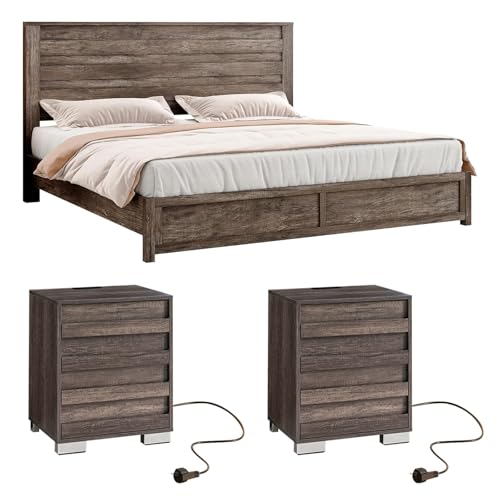
King Size Bed with Bedside Tables: The Complete Guide
Everything you need to know about pairing a king size bed with the right bedside tables — sizing, storage, frame styles, and bedroom layouts for a polished, functional sleep space.
Why this guide matters: A king size bed is a significant investment in rest and room design. The bedside tables you pair with it shape both comfort and function — they need to be the right height, the right width, and the right style for your frame. This guide walks you through every decision so you can buy with confidence.
Start With the Bed: Understanding King Size Dimensions
A standard king size bed measures roughly 76 inches wide by 80 inches long, while a California king runs about 72 inches wide by 84 inches long. Those few inches matter once you add bedside tables, because a king bed already claims most of the wall in a typical primary bedroom. Before shopping, measure your room and map out the footprint of the bed plus two nightstands.
If you are still weighing frame options, our overview of king beds and the broader king size beds collection covers the main categories and helps you decide between standard and California king. For shoppers ready to compare complete sets, the king size beds for sale page groups frames and bundles by style.
How Much Space Do Bedside Tables Need?
As a general rule, leave 18 to 24 inches of clearance between the edge of the mattress and each bedside table so you can get in and out comfortably. If your room is tight, slim tables — sometimes called Japanese-style bedside tables — keep the walkway open without sacrificing a surface for a lamp, book, and phone. For rooms with generous space, large bedside tables with drawers add storage and visual balance on both sides of a king bed.
Choosing the Right Bedside Tables for a King Bed
The ideal bedside table height sits level with or slightly below the top of your mattress. For most king beds, that means tables between 22 and 28 inches tall, depending on your mattress thickness and frame height. Height matters more than width: a table that is too low forces you to reach, while one that is too tall feels clunky and blocks sightlines.
| Tier | Best For | Typical Features |
|---|---|---|
| Essential tier | Simple, functional setups | Single drawer, open shelf, laminate or painted finish |
| Balanced tier | Everyday bedrooms with storage needs | Two drawers, solid wood or engineered wood, soft-close hardware |
| Premium tier | Coordinated bedroom design | Dovetail joinery, hardwood, matching bed frame finishes |
| Luxury tier | Statement primary suites | Upholstered fronts, marble or stone tops, designer hardware |
Style consistency ties the room together. If your bed frame is upholstered, look at king size wood and upholstered beds to see how fabric and timber pair. If you prefer metal, king size metal beds pair well with industrial nightstands. And for a darker, moodier aesthetic, the industrial-style bedside cabinets guide shows how to match hardware and finishes.
Storage-Focused Pairings
Bedside tables are only half of the storage story. Many buyers pair a nightstand set with a bed that includes under-bed drawers, which is especially useful in smaller primary bedrooms. See king size beds with storage and mattress for combined solutions, or kingsize storage beds if you want to maximize every square foot. Taller headboards can also create a stronger visual anchor above the tables — browse king beds with tall headboards and king beds with high headboards for inspiration.
Bed Frame Styles That Work With Nightstands
Not every frame style plays nicely with bedside tables. Platform beds sit low and keep the tables visually grounded. Sleigh beds curve outward, so you may need to pull the tables slightly forward. Poster and canopy beds create a framed alcove that can make nightstands feel intentional. Here is a quick reference:
- Platform frames — low profile, clean lines, work with almost any table height. See king size platform beds for sale.
- Sleigh frames — curved footboard and headboard; choose tables that don't fight the curve. Compare king size sleigh beds for sale.
- Poster and canopy frames — dramatic and tall; pair with taller tables and slim lamps. Browse king size poster beds for sale and king size canopy beds for sale.
- Adjustable-friendly frames — leave space for articulation. See king bed frames for adjustable beds.
Bedding and Accessories That Complete the Setup
Once the bed and tables are in place, bedding ties the whole arrangement together. A king size bedspread should drape evenly on both sides, so measure the drop before buying. Our guides on king size bedspreads with shams, king bedspreads and comforters, and king size bedspread sets explain how to coordinate patterns and layers. If you prefer a crisp hotel look, king size bedsheet size in cm and kingsize bedsheet clarify the exact measurements so nothing comes up short.
For seasonal swaps, a lightweight summer bedspread for king size keeps the bed breathable, while a king size quilted bedspread set adds warmth in cooler months. Pair the bedding with a lamp on each nightstand and a small tray for essentials — the result is a functional, magazine-ready setup.
Layout Ideas: Fitting the Bed and Tables Together
The most common mistake is underestimating the footprint. A king bed plus two 24-inch-wide nightstands needs roughly 124 inches of wall space, plus walking clearance. If your room is narrower, consider these workarounds:
- Offset the bed toward one wall and use a single larger nightstand on the open side.
- Use slim tables under 20 inches wide, or wall-mounted shelves instead of freestanding tables.
- Choose a storage bed so the nightstands can focus on surface space rather than drawer volume.
- Anchor with a rug that extends beyond the bed and tables, visually expanding the floor plan.
If you are building around a specific aesthetic, the industrial bedroom guide shows how metal-and-wood tables pair with darker frames, while indoor plants offers small greenery ideas that fit on compact nightstand tops.
What to Check Before You Buy
Before finalizing a king bed and bedside table set, run through this checklist:
- Measure twice. Confirm bed dimensions, table dimensions, and the walkway on both sides.
- Match heights. Table tops should be within an inch or two of the mattress top.
- Check the finish. Wood tones should complement the frame; metal should match hardware.
- Plan outlets. Position tables near wall outlets for lamps and chargers.
- Consider assembly. Some frames and tables arrive flat-packed; check the hardware and instructions.
For shoppers comparing full package options, king size beds with frame and king size beds for sale with mattress group bundles that already include core components. And if you are exploring adjustable setups, king adjustable beds with mattress and king size headboards for adjustable beds cover the compatibility details.
Frequently Asked Questions
What size bedside tables go with a king bed?
Most king beds pair well with tables 20 to 28 inches wide. The key is height: the table top should sit level with or just below the mattress surface. Wider tables work in larger rooms, while slim tables keep walkways open in compact spaces.
How much space should be between a king bed and bedside tables?
Leave 18 to 24 inches of clearance between the mattress edge and each table. This allows comfortable entry and exit and keeps the tables within easy reach without feeling cramped.
Can I use mismatched bedside tables with a king bed?
Yes — asymmetrical setups are a popular design choice. Many people use a larger table with drawers on one side and a slim table or wall shelf on the other. Keep heights similar so the room still feels balanced.
Do I need a specific bed frame for bedside tables?
No specific frame is required, but platform and panel frames pair most easily because their straight edges make table placement predictable. Curved sleigh and poster frames may require pulling the tables slightly forward for reach and visual balance.
How do I style bedside tables on a king bed?
Start with a lamp proportional to the table, add a small tray for essentials, and finish with one decorative item such as a plant or book stack. Keep both sides roughly symmetrical for a calm, hotel-like look.