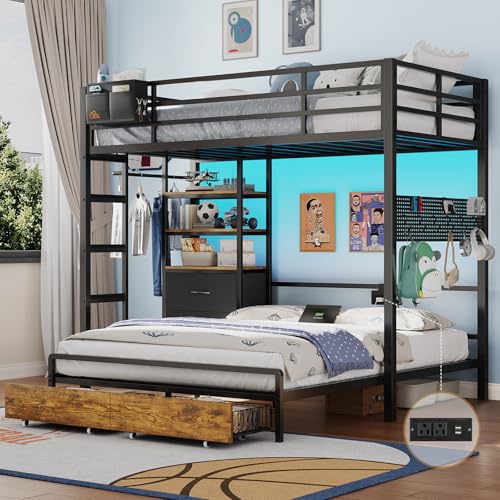
L Shaped Bunk Beds Twin Over Full: The Complete Buying Guide
Maximize space and sleep more people with a smart corner bunk bed layout. Everything you need to know before choosing.
START LEARNINGWhy an L shaped bunk bed? If you are outfitting a shared kids' room, a teen bedroom, a vacation home, or a guest space, an L shaped bunk bed twin over full offers a space-saving footprint that traditional parallel bunk beds cannot match. This guide walks you through layout options, safety considerations, material choices, and which tier of product fits your needs best.
What Is a Twin Over Full L Shaped Bunk Bed?
An L shaped bunk bed is a configuration where the upper and lower sleeping platforms are set at a perpendicular angle rather than stacked directly parallel. In the twin over full arrangement, the top bunk is a twin size while the bottom bunk is a full size. The "L" shape comes from the way the beds form a corner, leaving open floor space in the center of the room instead of projecting straight out from one wall.
This design is especially popular for families who need to sleep two people of different sizes—such as a younger child on the top twin and a teen or adult on the full bottom bunk—without sacrificing the feel of an open, functional room. Unlike full over full low bunk beds, which stack two full-size mattresses directly on top of each other, the L shaped twin over full gives each sleeper a distinct zone.
How the L Shape Works
Picture a corner of a room. One bed runs along the left wall, the other along the back wall, and they meet at a shared corner post or a connecting frame. The upper twin bunk typically sits above one of the lower sections, while the full bunk extends along the adjacent wall. This configuration is sometimes called a corner bunk bed or a perpendicular bunk bed.
The result is a footprint that hugs the corner rather than jutting into the room. In small rooms, this can be the difference between a cramped, obstacle-course bedroom and a space that feels intentional and even roomy. If you are working with a tight layout, you may also want to explore bunk beds for small rooms for additional ideas.
Space-Saving Layouts and Room Planning
Before you commit to an L shaped bunk bed, take a few measurements and think carefully about how the room will function day to day.
Room Dimensions to Consider
- Corner clearance: Measure both walls of the corner where the bed will go. You need enough uninterrupted wall space on both sides for the two sleeping platforms.
- Ceiling height: The top twin bunk needs safe headroom. A general rule is at least 30 to 36 inches between the top mattress surface and the ceiling, plus clearance for the frame itself.
- Door and window swing: Make sure the bed does not block a door, closet, or window. L shaped beds consume corner space, so plan the entry path first.
- Ladder or stair placement: The ladder or staircase must have clear access and should not open into a walkway where someone could trip.
Best Room Shapes for L Shaped Bunks
Square and slightly rectangular rooms tend to work best. In a long, narrow room, an L shaped bunk can actually help break up the tunnel effect by using the far corner. In very small rooms, consider a twin over twin bunk bed with storage drawers if the L shape feels too large, or look at twin beds for small rooms for a more compact alternative.
Safety Features That Matter
Bunk beds involve height, and height means safety must be a priority—especially in homes with young children. An L shaped bunk bed twin over full has a few specific safety considerations.
Guardrails on the Top Bunk
The upper twin bunk should have guardrails on all open sides. For an L shaped bed, at least one side may be against a wall, but the exposed sides still need full rails. Check that the rails are securely attached and tall enough to prevent roll-off.
Sturdy Ladder or Stairs
A ladder should be firmly fixed, with flat, wide steps and a handhold. Stairs with built-in storage are a popular upgrade for families with younger children because they are easier and safer to climb.
Weight Capacity
Look for a frame rated for the weight of the intended sleepers plus a margin. If adults or teens will use the top bunk, verify that the upper bed's capacity supports them. Heavy-duty frames are worth considering for long-term use.
Corner Stability
The corner joint where the two bed sections meet is a critical stress point. A well-engineered L shaped bunk uses reinforced corner posts or a connecting bracket system so the frame does not wobble over time.
For families who want maximum strength, explore heavy weight capacity bunk beds and custom bunk beds for adults when the sleepers are older or heavier. If young children are the primary users, review children's bunk beds for age-appropriate designs.
Materials and Construction Quality
The material of your L shaped bunk bed affects durability, stability, and long-term appearance. Here is how the main options compare.
| Material | Best For | Durability | Notes |
|---|---|---|---|
| Solid Wood | Long-term family use | High | Heavy and stable; repairable and refinishable. Look for solid wood construction for the most enduring frame. |
| Engineered Wood | Mid-range family rooms | Moderate to high | Consistent finish and good stability; check the joinery quality and weight ratings. |
| Metal | Teens and adults | High | Slim profile and strong; choose a reinforced frame with a rust-proof finish for longevity. |
| Metal and Wood Hybrid | Style-conscious rooms | Moderate to high | Combines a metal support structure with wood accents for a warmer look. |
If you prefer the warmth and character of wood, you may also like bunk beds with solid wood construction and wood bunk beds. Metal options pair well with a modern bedroom aesthetic and can be paired with a modern bedside table lamp for a cohesive look.
Understanding Product Tiers
L shaped bunk beds twin over full are available across a range of quality tiers. Rather than thinking in terms of numbers, think in terms of what each tier typically delivers.
Entry-Level Tier
Basic frames with simpler joinery and lighter materials. Suitable for light use, younger children, and temporary setups. Expect fewer design flourishes but functional safety features.
Mid-Range Tier
Stronger frames with better hardware, smoother finishes, and more consistent weight ratings. A solid choice for daily family use and a good balance of durability and design.
High-End Tier
Solid wood or heavy-duty metal construction, reinforced corner joints, integrated storage, and premium finishes. Designed for long-term use and higher weight capacities.
Luxury Tier
Flagship designs with custom-inspired detailing, top-grade materials, and superior craftsmanship. Often includes built-in stairs, under-bed storage, and refined aesthetics.
Comparison: L Shaped vs Standard Bunk Beds
How does an L shaped twin over full compare to a traditional parallel bunk bed or a full-over-full design?
| Feature | L Shaped Twin Over Full | Standard Parallel Bunk |
|---|---|---|
| Footprint | Hugs the corner, leaves open floor space | Projects straight out from the wall |
| Sleeper Sizes | One twin and one full—ideal for mixed ages | Often two twins; full over full also common |
| Room Flow | Better for rooms where the center needs to stay clear | Better for long, narrow rooms |
| Assembly Complexity | Moderate to high (corner join) | Moderate |
| Best For | Shared kids' rooms, guest rooms, vacation homes | Standard kids' rooms and dorms |
If you need two full-size sleeping surfaces, explore full size bunk beds with mattress or bunk beds with full on bottom. For a triple-sleeper option, see triple bunk beds L shaped.
Who Is This Bed Best For?
- Families with children of different ages: A younger child can take the top twin while an older sibling enjoys the full bottom bunk.
- Teen bedrooms: The full bottom bunk provides adult-sized comfort, and the corner layout feels more like a designed space than a stacked dorm bed.
- Guest and vacation homes: Sleep two guests comfortably without dedicating the entire room to beds.
- Small apartments: The L shape frees up center floor space for a desk, dresser, or play area.
- Grandparents' homes: A twin over full arrangement accommodates visiting grandchildren and adult guests alike.
If you need extra sleeping capacity for guests beyond the bunks, consider day beds with trundle full size or guest beds for small spaces. For households that also need flexible seating, sofa sleepers and convertible couches are worth reviewing.
Frequently Asked Questions
What mattress sizes fit an L shaped bunk bed twin over full?
The top bunk takes a standard twin mattress, and the bottom bunk takes a standard full mattress. Always confirm the maximum mattress thickness recommended by the manufacturer, because overly thick mattresses can reduce guardrail effectiveness on the top bunk.
Is an L shaped bunk bed safe for young children?
Yes, provided the bed has proper guardrails, a secure ladder or stairs, and the child meets the minimum age recommendation for top-bunk use. Most safety guidelines suggest children under six should not sleep on the upper bunk. Check the specific product's safety documentation.
Can an L shaped bunk bed be separated into two beds?
Some designs can be split into a separate twin bed and full bed, while others are built as a single unit. If flexibility matters to you, look for a convertible or separable design, or compare with bunk beds with mattresses included for bundled options.
How much floor space does an L shaped twin over full bunk save?
Because the beds share a corner rather than stacking along one wall, the layout can preserve a meaningful amount of center floor space compared with two separate beds. The exact savings depend on the bed's dimensions, so measure both walls of your corner before ordering.
Do L shaped bunk beds require special assembly?
They typically require more assembly than a standard parallel bunk because of the corner connection. Follow the manufacturer's instructions carefully, and consider professional assembly if the frame is large or the instructions are complex.
What is the best material for a long-lasting L shaped bunk bed?
Solid wood and heavy-duty metal frames tend to offer the best long-term durability. Engineered wood can also perform well when the joinery is solid. Whichever material you choose, verify the weight capacity and check the corner reinforcement.