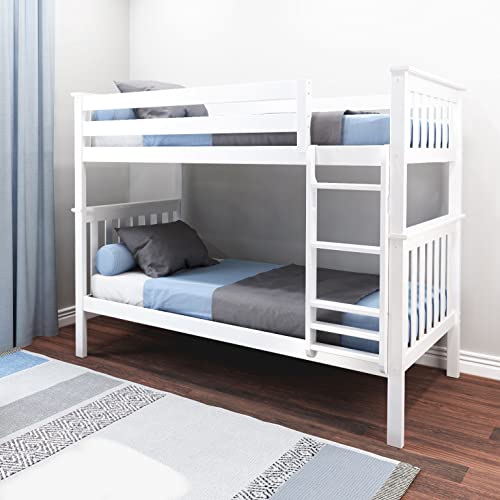
Wood Frame Twin Over Twin Bunk Beds: The Complete Guide
Everything parents and shoppers need to know about solid wood bunk beds — construction, safety standards, space-saving benefits, and how to choose a model your family will use for years.
START THE GUIDEWhy wood frame twin over twin bunk beds matter: A bunk bed is one of the few pieces of furniture that must combine structural strength, child safety, and everyday convenience. Wood frames are the most popular choice for families because they offer warm aesthetics, solid joinery, and a footprint that fits two sleepers into the space of one twin bed. This guide walks you through every decision — from frame material and guardrail design to mattress fit and long-term durability — so you can buy with confidence.
What Defines a Wood Frame Twin Over Twin Bunk Bed?
A wood frame twin over twin bunk bed stacks two standard twin sleeping surfaces vertically within a single footprint. The upper bunk is accessed by a built-in ladder or stair unit, and the lower bunk sits at or near floor level. Unlike metal bunks, wood frames are assembled from solid timber, engineered wood, or a combination of both, connected with bolts, dowels, and sometimes mortise-and-tenon joints.
The twin over twin configuration is the most common bunk size because it matches standard twin mattresses and bedding, making it practical for siblings sharing a room, guest rooms, vacation homes, and transitional spaces. If you are still comparing formats, our overview of wood bunk beds twin over twin covers the broader category, while this page focuses specifically on wood frame construction and what to look for.
Wood frames are available across the market spectrum — from entry-level pine models to premium hardwood designs with reinforced slat systems. The descriptor tiers used throughout this guide are universal quality classifications rather than specific figures:
- Entry-level: basic pine or engineered wood, straightforward hardware, suitable for light use.
- Mid-range: solid wood main rails, reinforced slats, smoother finish, better hardware.
- Premium: hardwood construction, thicker posts, precision joinery, and upgraded safety features.
- Luxury / flagship tier: furniture-grade hardwood, hand-finished surfaces, convertible designs, and commercial-grade stability.
Why Choose a Wood Frame Over Other Bunk Materials?
Warm, Versatile Aesthetics
Wood blends with farmhouse, Scandinavian, coastal, and transitional interiors. Painted finishes suit playful kids' rooms, while natural grain works in adult guest spaces.
Solid, Quiet Structure
Well-built wood frames absorb movement better than thin metal frames, reducing squeaks and wobble during the night — a major factor for light sleepers.
Repairable and Refinishable
Scratches on wood can be sanded and refinished. Metal frames dent and chip, and painted engineered wood cannot be easily restored.
Strong Resale and Reuse
Solid wood bunk beds hold their usefulness across multiple children and often transition into separate beds, extending the life of the furniture.
Flexible Design Options
Wood frames support integrated storage, stair units, desks, and convertible configurations more easily than tubular metal designs.
Comfortable Mattress Support
Wood slat systems distribute weight evenly and pair well with foam and hybrid twin mattresses, reducing sagging over time.
If you are weighing different bunk formats, our guide to wooden bunk beds explains how wood frames compare with metal and upholstered options across durability and design flexibility.
Construction Details That Separate Good Bunk Beds From Great Ones
Frame Material and Joinery
The strongest wood bunk beds use solid hardwood — pine, rubberwood, acacia, or oak — for the main posts and rails. Engineered wood (MDF or particleboard) is acceptable in panels and drawer boxes but should not be the primary structural material for load-bearing posts. Look for bolted connections with metal inserts rather than screws directly into end grain, and check whether the manufacturer specifies a weight capacity per bunk.
Entry-level models often rely on cam-lock and screw assembly. Mid-range and premium tiers typically add metal-on-metal bolt connections, thicker posts (often two inches or more), and center support rails. The difference shows up over years of use: a mid-range frame will usually stay tighter and quieter than an entry-level frame under the same daily load.
Slat Systems and Mattress Support
Slats are the horizontal boards that support the mattress. A good bunk bed uses closely spaced hardwood or plywood slats — ideally no more than three to four inches apart — with a center support rail on larger spans. Roll-out or bolt-on slat systems are easier to replace if one slat cracks. Some premium models include a slat-to-frame locking mechanism that prevents shifting.
Slat quality directly affects mattress longevity. A weak slat system causes foam mattresses to sag and voids many mattress warranties. If you plan to use a heavier hybrid mattress, confirm the bunk is rated for it, and review our guidance on when to replace a mattress to understand how support structure influences lifespan.
Ladders, Stairs, and Guardrails
Safety hardware is where budget and mid-range bunk beds diverge most visibly. Key features to confirm:
- Full-length guardrails on the top bunk on all four sides, with no more than a small gap at the ladder opening.
- Guardrail height of at least five inches above the mattress surface, measured with the mattress in place.
- Ladder attachment that hooks over the top rail or bolts to the frame — never a ladder that simply leans.
- Anti-slip ladder rungs or flat steps, especially for younger children.
- Stair units with handrails on premium and flagship models, often with built-in storage drawers.
If accessibility is a concern for younger children or grandparents, stair-based designs are worth the upgrade. Our collection of white twin bunk beds with stairs illustrates how stair units integrate storage and safety in one footprint.
Finish and Safety Standards
Wood finishes should be low-VOC and compliant with children's furniture safety regulations in your region. Look for non-toxic water-based finishes, rounded corner posts, and no exposed bolt ends. Many reputable manufacturers publish compliance with voluntary bunk bed safety standards; always confirm this in the product documentation before purchase.
Twin Over Twin Bunk Bed Size and Space Planning
Two twin mattresses each measure approximately 38 by 75 inches. A wood frame twin over twin bunk bed typically occupies a footprint close to a standard twin bed plus the thickness of the frame and ladder clearance — making it an efficient choice for rooms where two sleepers must share limited floor area.
| Configuration | Sleepers Accommodated | Best For | Space Characteristic |
|---|---|---|---|
| Twin over twin bunk | 2 | Siblings, guest rooms, vacation homes | Two sleepers in roughly one twin footprint |
| Twin over full bunk | 2–3 | Mixed-age siblings, sleepovers | Wider lower bunk for couples or older children |
| Full over full bunk | 2–4 | Teens, adult guests | Largest footprint, most generous sleeping surface |
| Loft bunk with desk | 1–2 | Studying and sleeping in one zone | Vertical space used for a workspace below |
If you need a wider lower bed but want to keep the twin upper bunk, our guide to wood bunk beds twin over full explains the trade-offs in footprint and mattress compatibility. For rooms that need maximum storage, consider models with integrated drawers — the wooden bunk beds with drawers category shows how under-bed storage changes the practical capacity of a small room.
Safety Checklist Before You Buy
- Age and weight ratings: Confirm the minimum age for the top bunk and the weight capacity for each level.
- Guardrail coverage: Verify full-length rails on the top bunk with a secure ladder opening.
- Ladder security: The ladder must attach firmly and not shift under load.
- Mattress thickness limits: The top bunk usually requires a thinner mattress (often six to eight inches) so the guardrail remains effective.
- Corner and edge finishing: Rounded edges and no exposed sharp hardware.
- Stability on the floor: The frame should sit flat without wobble; check for leveling hardware or felt pads.
- Assembly documentation: Clear instructions and labeled hardware reduce the risk of improper assembly, which is a leading cause of bunk bed accidents.
- Room placement: Position the bunk away from ceiling fans, windows, and heavy wall decor.
Mattress Selection for Wood Bunk Beds
Twin over twin bunks pair best with twin mattresses that are supportive but not excessively thick. Foam, hybrid, and innerspring twins all work, provided the top bunk mattress respects the manufacturer's height limit. A firmer mattress is generally preferable for the top bunk because it reduces the chance of the mattress compressing below the guardrail line.
For lower bunks, mattress choice is more flexible — a plusher twin works well for younger children. If you are outfitting a guest room, keep both mattresses medium-firm for broad comfort. Bedding should be sized to twin; zip-up and zip-off bedding systems are popular for bunk beds because they simplify changing sheets on the top bunk. Our guides to zip-up bedding for bunk beds and zip-off sheets for bunk beds explain how these systems reduce weekly laundry effort.
Assembly, Placement, and Long-Term Care
Assembly Tips
Most wood frame bunk beds ship flat-packed and take one to three hours to assemble with two people. Build on a soft surface to protect the finish, sort hardware by step, and tighten bolts progressively rather than fully tightening each one immediately. Re-check all connections after the first week of use, then every few months.
Room Placement
Place the bunk against a wall where possible to reduce movement, but avoid pushing guardrails flush against a wall in a way that creates a gap a child could become trapped in. Keep the ladder clear and never place the bunk directly under a ceiling fan or heavy hanging decor.
Care and Maintenance
Dust the frame regularly with a dry cloth. For painted finishes, use a mild damp cloth and dry immediately. Check bolts and slat connections every few months, especially in households with active children. Tighten any loose hardware and replace cracked slats promptly — a single failed slat compromises mattress support.
Twin Over Twin Bunk Bed Styles and Finishes
Wood bunk beds are available in natural wood tones, white, grey, espresso, and two-tone finishes. White finishes remain the most popular for children's rooms because they brighten small spaces and pair easily with colorful bedding. Natural wood tones suit guest rooms and older children's spaces. If you prefer a white palette, explore white bunk beds for finish and design inspiration.
Design details also vary: slatted headboards, panel headboards, and cottage-style guardrails each change the visual weight of the bed. For a more classic silhouette, the wooden bed frames category includes related single-bed styles that match bunk aesthetics.
Convertible and Specialty Wood Bunk Options
If you want a bed that adapts as children grow, look for convertible designs that separate into two standalone twin beds. The wood bunk beds that can be separated guide covers the mechanisms and structural differences involved. For families that need three sleeping surfaces, triple bunks are worth considering — see white wooden triple bunk beds for how these configurations handle vertical space and safety.
Space-saving layouts sometimes combine a bunk with a desk or shelving. The wood bunk beds with desk category shows how a study zone can share the bunk footprint, useful for school-age children in smaller bedrooms.
Who Should Buy a Wood Frame Twin Over Twin Bunk Bed?
- Families with siblings sharing a room: two sleepers in one footprint, with options for storage and stairs.
- Guest rooms and vacation homes: flexible sleeping for children and adults, with a familiar, home-like feel.
- Small apartments and city homes: vertical space use maximizes floor area for play or study.
- Multi-generational households: mid-range and premium tiers with stair access suit a wider age range.
- Anyone planning long-term furniture use: solid wood construction and convertible designs extend the bed's usable life.
Wood frame twin over twin bunk beds are less suitable for very young children on the top bunk, for rooms with low ceilings, or for households that need a bed to be moved frequently — assembled wood bunks are heavy and not designed for repeated disassembly.
Common Mistakes to Avoid
- Ignoring ceiling height: the most common regret among bunk bed buyers.
- Using an oversized top mattress: it can sit above the guardrail and create a fall risk.
- Placing the ladder on the wrong side: plan the layout before assembly so the ladder faces the open floor area.
- Skipping hardware checks: loose bolts are a leading cause of wobble and accidents.
- Buying without confirming weight limits: especially important for teen and adult use.
- Choosing a thin slat system: it shortens mattress life and undermines stability.
Frequently Asked Questions
What age are wood frame twin over twin bunk beds suitable for?
Most manufacturers recommend the top bunk for children aged six years and older. Younger children should use the bottom bunk. Always check the specific manufacturer's age recommendation and weight limits before purchase.
Are wood bunk beds strong enough for adults?
Many solid wood twin over twin bunk beds are engineered to support adults on both levels, often rated for several hundred pounds per bunk. Always verify the stated weight capacity for each tier before allowing adult use.
Do wood frame twin over twin bunk beds require assembly?
Yes, nearly all wood bunk beds ship flat-packed and require assembly. Most include hardware and instructions, and assembly typically takes one to three hours with two people. Some models offer tool-free or quick-lock assembly systems.
Can twin over twin bunk beds be separated into two beds?
Some wood bunk bed designs are convertible and can be split into two standalone twin beds. Check the product description for a convertible or separable design if flexibility is important to you.
What mattress thickness works best for a top bunk?
Top bunks typically require a mattress no thicker than six to eight inches to keep the guardrail effective. Always follow the manufacturer's maximum mattress height specification for the upper bunk.