Bunk Beds for Sale Near Me: The Complete Buyer’s Guide
If you are searching for bunk beds for sale near you, this guide walks you through every decision — from frame size and safety standards to mattress thickness and room layout — so you can choose with confidence.
Explore Bunk Bed OptionsWhy this guide matters: Bunk beds are one of the most space-efficient purchases you can make for a bedroom, guest room, vacation home, or shared space. But they are also one of the easiest pieces of furniture to get wrong. The wrong size, the wrong material, or a frame that is not rated for the people using it leads to discomfort, instability, and safety concerns. Below, we break down what actually matters when you are shopping locally or online.
What to Know Before You Search Locally
When people type “bunk beds for sale near me” into a search engine, they are usually balancing three priorities: getting the right size for the room, confirming the frame can safely support the intended sleepers, and finding a model that will hold up over years of use. Local availability is helpful because you can inspect the frame in person, but the same criteria apply whether you buy in a store or online. Start by measuring your room and ceiling height, then narrow down the bed configuration that matches your space.
Ceiling height is the single most overlooked factor. A standard bunk bed needs roughly 30 to 36 inches of clearance between the top mattress and the ceiling for a comfortable sleeper. If your ceiling is low, look for a low-profile frame or a bunk bed for rooms with low ceilings. If your room is small, a bunk bed for small rooms with integrated storage can replace both a bed and a dresser.
Bunk Bed Types and Who They Suit
The configuration you choose should follow the sleepers and the room, not the other way around. Here is a practical breakdown of the most common options available when you shop for bunk beds.
Twin-over-Twin Bunk Beds
The most compact standard configuration. Ideal for children sharing a room, guest spaces, and cabins. Easy to fit in narrow rooms and the most widely available option. See our twin-over-twin bunk bed guide for sizing details.
Twin-over-Full Bunk Beds
A larger lower sleeping surface that suits teens and adults on the bottom bunk. A good middle ground when one sleeper needs more room. Explore twin-over-full bunk beds and the trundle version for extra guests.
Full-over-Queen Bunk Beds
Premium configurations built for adult use, vacation homes, and primary bedrooms. These frames use reinforced construction and higher weight ratings. See full-over-queen bunk beds for adults.
Loft and Storage Bunk Beds
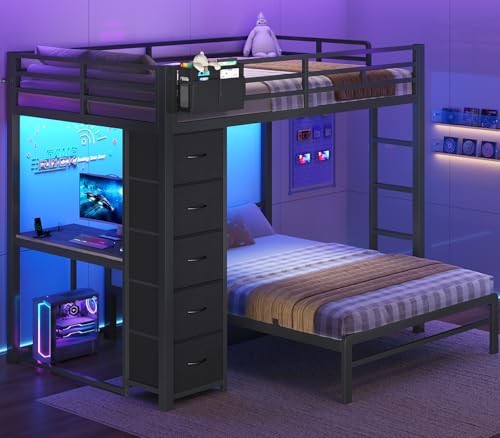
Raise the sleeping surface and use the floor space underneath for a desk, storage, or seating. Excellent for small rooms and students. Compare bunk beds with a desk and pull-out bed.
Separable and Convertible Bunks
Frames that split into two standalone beds as needs change. A long-term investment that adapts from childhood to teen years. See bunk beds that separate into single beds.
Adult-Rated and Heavy-Duty Bunks
Reinforced metal or solid wood frames rated for adult sleepers. Look for welded joints, wider rails, and clearly stated weight limits. Explore bunk beds that can hold adults.
Bunk Bed Buying Checklist
Before you commit to any bunk bed, run through this checklist. It will save you from the most common buying mistakes.
- Measure ceiling height and clearance. Confirm at least 30 inches between the top mattress and the ceiling.
- Confirm the weight rating. Every bunk bed should state a per-bunk weight limit. Match it to the heaviest intended sleeper.
- Check guardrail height. The top bunk needs a guardrail that extends at least 5 inches above the mattress surface.
- Verify mattress thickness compatibility. Most bunks are designed for mattresses 6 to 10 inches thick. Avoid thicker mattresses on the top bunk.
- Inspect the ladder and stairs. A sturdy, wide ladder or built-in stairs make daily use safer, especially for children.
- Look at the frame material. Metal frames are durable and stable; solid wood frames offer a warmer look. Avoid particle board for the main structure.
- Check assembly requirements. Most bunks ship flat-packed. Confirm what tools are needed and whether two people are required.
- Plan for the room layout. Leave enough space for the ladder, drawers, and walking clearance around the frame.
Bunk Bed Configurations Compared
Use this reference table to compare the most common bunk bed categories by tier, best use case, and key considerations. No numeric figures are included because the right choice depends on your room, sleepers, and long-term plans.
| Configuration | Market Tier | Best For | Key Consideration |
|---|---|---|---|
| Twin-over-Twin | Entry-Level | Kids’ rooms, guest rooms, cabins | Most compact footprint; confirm weight rating for older children |
| Twin-over-Full | Mid-Range | Teens, mixed-age siblings, guest spaces | Larger bottom bunk requires more floor space |
| Full-over-Queen | Premium | Adults, vacation homes, primary bedrooms | Heavy-duty frame and higher ceiling clearance needed |
| Loft with Desk | Mid-Tier | Students, small rooms, work-from-home setups | Stair or ladder placement affects usable floor area |
| Separable Bunk | High-End Tier | Growing families, flexible layouts | Verify the split mechanism and hardware quality |
| Adult-Rated Bunk | Professional-Grade | Adult sleepers, shared housing, bunkhouses | Confirm stated weight capacity and reinforced joints |
Safety, Materials, and Long-Term Durability
Bunk bed safety comes down to three things: frame strength, guardrail design, and correct assembly. Metal frames with welded joints tend to be the most stable for adult use, while solid wood frames offer a warmer aesthetic and are common in children’s rooms. Either material works well if the frame is properly reinforced and the manufacturer provides clear weight limits.
Pay attention to the ladder and guardrails. A ladder that hooks securely over the side rail is safer than one that leans against the frame. Guardrails should be fixed, not removable, on the top bunk. If you are buying for children, look for rounded edges and avoid frames with sharp corner hardware. For adult use, prioritize frames described as heavy-duty or reinforced, and check the specifications for a per-bunk weight rating that comfortably exceeds the sleeper’s weight.
Assembly quality matters as much as the product itself. Follow the manufacturer’s instructions exactly, tighten all bolts after the first week of use, and re-check hardware every few months. A well-assembled mid-range bunk bed will often outperform a poorly assembled premium frame.
Related Bunk Bed Guides
- Bunk Bed Buying Guide
- Bunk Bed Frames
- Bunk Beds for Sale
- Bunk Beds for Adults for Sale
- Bunk Beds for Kids
- Bunk Beds for Small Rooms
- Bunk Beds for Adults
- Twin-over-Full Bunk Beds
- Twin-over-Twin Bunk Beds for Adults
- Bunk Beds with Storage
- Bunk Beds with Trundle
- Bunk Beds for 12-Inch Mattress
- Build Bunk Beds
- Built-in Bunk Beds
- Bunk Beds for Camping
Pairing the Right Mattress with Your Bunk Bed
The mattress you pair with a bunk bed affects both comfort and safety. A mattress that is too thick can rise above the guardrail on the top bunk, which defeats the purpose of the rail. A mattress that is too thin can leave gaps between the mattress and the frame, creating pressure points and instability.
For most standard bunk beds, a mattress between 6 and 10 inches thick works well. If you are buying for a child, a firmer mattress provides better support and reduces the risk of the mattress compressing below the guardrail. If the bunk is rated for adults, choose a mattress with a supportive core that matches the sleeper’s weight and preferred sleep position. Our guide to bunk beds for a 12-inch mattress covers the thicker end of the range, while the complete bunk bed buying guide explains how to match firmness to sleep position.
Frequently Asked Questions
What size bunk bed is best for a small room?
Twin-over-twin bunk beds are the most compact standard option and fit well in small rooms. For tighter spaces, consider a twin-over-twin with built-in storage or stairs, or a loft configuration that frees up floor area underneath.
Are bunk beds safe for adults?
Yes. Adult-rated bunk beds use reinforced frames, higher weight capacities, and wider sleeping surfaces. Look for heavy-duty metal or solid wood construction rated for adult use, and always confirm the manufacturer’s weight limits.
What mattress thickness works with bunk beds?
Most bunk beds are designed for mattresses between 6 and 10 inches thick. The top bunk should not exceed the guardrail height, so check the manufacturer’s recommended maximum thickness before buying.
Do bunk beds require assembly?
Most bunk beds ship flat-packed and require assembly. Mid-range and premium models typically include clearer instructions and pre-drilled hardware, while entry-level frames may need more patience and basic tools.
Can bunk beds be separated into two single beds?
Many modern bunk beds are designed to separate into two standalone beds, which is useful as children grow or when room layouts change. Check the product specifications for a convertible or separable design.
Ready to compare options? Browse our recommended bunk bed selections below, or review the complete bunk bed buying guide for a deeper walkthrough of frame materials, safety standards, and room planning. If you are specifically looking for adult-rated models, the bunk beds that can hold adults guide is the best next step.