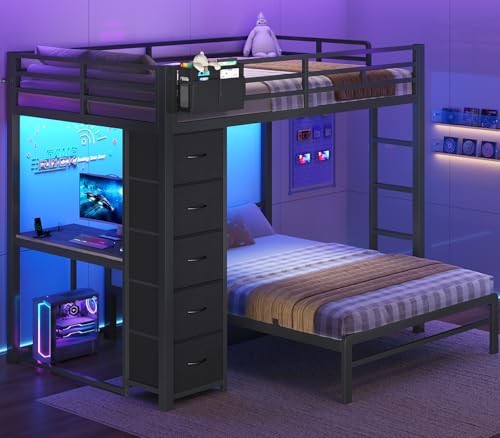
Full Size Bunk Beds: The Complete Top and Bottom Buying Guide
Full size bunk beds with top and bottom sleeping spaces offer an ideal balance of roominess and vertical efficiency. Whether you are furnishing a shared bedroom, a guest room, or a vacation property, a full over full bunk bed delivers generous sleeping capacity without consuming extra floor area. This guide walks you through frame construction, safety considerations, mattress compatibility, and layout planning so you can make a confident, well-informed choice.
Why Choose a Full Size Bunk Bed with Top and Bottom Beds?
A full size bunk bed pairs two full-size sleeping surfaces in a single vertical footprint. That means each sleeper enjoys the width and length of a standard full mattress — roughly 54 inches wide by 75 inches long — while the room preserves valuable floor space for storage, play, or study areas. This configuration is especially practical for teenagers, college students, adult siblings sharing a room, and vacation homes that need to accommodate guests comfortably.
Compared with twin over twin designs, a full over full bunk bed provides noticeably more shoulder room and allows couples or taller sleepers to rest without feeling cramped. Many models are also engineered to separate into two independent full beds, giving you flexibility as your household needs change. If you are exploring broader bunk bed configurations, our bunk bed buying guide covers sizing, materials, and layout considerations in greater depth.
Key Frame Types and Materials
The frame material and joinery largely determine a bunk bed's durability, stability, and visual character. Here is how the most common options compare:
| Frame Type | Best For | Tier | Notable Traits |
|---|---|---|---|
| Solid Wood (Pine, Oak, Maple) | Long-term family use, traditional or rustic interiors | Mid-range to premium | Durable construction, repairable, warm aesthetic |
| Metal (Steel or Iron) | Modern rooms, high-traffic settings, easy assembly | Entry-level to mid-range | Heavy-duty hardware, slim profile, rust-proof finish options |
| Upholstered | Guest rooms, adult bedrooms, soft contemporary styling | Premium to luxury | Padded rails, noise-dampening, fabric maintenance required |
| Engineered Wood / MDF | Light use, children's rooms, versatile finishes | Essential tier | Uniform finish, lighter weight, may have lower weight ratings |
Solid wood and high-grade steel frames typically offer the most robust long-term performance. If you are comparing specific full-size configurations, our overview of full over queen bunk beds and twin over full bunk beds can help you weigh alternative proportions against a full over full layout.
Safety Features to Prioritize
Bunk bed safety hinges on guardrails, ladder design, weight ratings, and assembly quality. When evaluating a full size bunk bed with top and bottom beds, check for these essentials:
- Full-length guardrails on the top bunk, with no more than a 3.5-inch gap between the rail and the mattress surface.
- Reinforced corner posts and hardware — look for metal-to-metal connections rather than wood screws alone.
- Weight capacity ratings that clearly state per-bunk limits; adult-rated models typically specify higher thresholds.
- Wide, angled, or integrated ladders with anti-slip steps for secure access.
- No bunk bed use for children under six on the top level, per common safety guidance.
For households with younger children, models with built-in bunk beds with stairs offer safer, easier access than traditional ladders. Families furnishing a children's room may also find our bunk beds for kids resource helpful for age-appropriate safety checks.
Mattress Compatibility and Room Planning
Full size bunk beds require two full mattresses. For the top bunk, a low-profile or standard-height mattress — typically under 8 inches — is safest because it keeps the sleeping surface well below the guardrail. The bottom bunk is more flexible and can accommodate a standard full mattress. Many shoppers pair their bunk bed with a supportive model from our budget mattresses selection for the lower bunk while choosing a firmer, lower-profile option for the top.
Room planning matters just as much as the frame itself. Measure your ceiling height, door clearance, and window placement before purchasing. A standard full over full bunk bed needs roughly 8 feet of ceiling height for comfortable top-bunk headroom. For spaces with lower ceilings, explore bunk beds for rooms with low ceilings or bunk beds for sloped ceilings. Small rooms benefit from designs that integrate storage — see our guides to bunk beds for small rooms and bunk beds for small rooms with storage.
Versatility: Beds That Separate, Convert, or Add Storage
One of the strongest arguments for a full size bunk bed is long-term adaptability. Many models are engineered to split into two standalone full beds, which is useful when children grow up or when you move to a home with different spatial constraints. If this flexibility appeals to you, review bunk beds that can be separated and bunk beds that separate into single beds.
Storage integration is another practical advantage. Options range from under-bed drawers to built-in shelving and trundle units. Consider bunk beds for adults with storage, bunk beds with built-in shelves, or bunk beds with a trundle underneath if you need to accommodate occasional extra guests. For dedicated workspaces, bunk beds twin over full with desk and bunk beds with a desk underneath illustrate how a bunk configuration can double as a study zone.
Adult Use and Heavy-Duty Considerations
Full size bunk beds are no longer confined to children's rooms. Adult-rated models use reinforced frames, thicker rails, and higher weight capacities to support daily use by teenagers and adults. If you are shopping for a guest room or a multi-generational household, explore bunk beds that can hold adults, bunk beds for adults twin over full, and bunk beds for adults with mattresses included for turnkey setups.
For vacation properties and rental units, heavy-duty frames with commercial-grade hardware reduce maintenance and improve guest safety. Our bunk beds for adults twin over twin and bunk beds twin over twin for adults guides provide additional comparison points if you are weighing full over full against twin configurations.
Style and Placement Ideas
Full size bunk beds fit a wide range of interior styles. A black metal frame suits modern and industrial rooms, while solid wood complements rustic and transitional spaces. If you are coordinating finishes, browse black bunk beds twin over twin and blue bunk beds twin over full for color inspiration. Pair the bed with blackout curtains to improve sleep quality, and consider a black modern bedside table or black wood bedside table to complete the layout.
For rooms that need to serve multiple functions, bunk beds with a couch and bunk beds with couch on bottom designs convert the lower level into a lounge area during the day. Similarly, bunk bed with two beds and desk configurations support study or work-from-home needs.
Assembly, Maintenance, and Longevity
Proper assembly is critical for bunk bed safety. Follow the manufacturer's instructions precisely, tighten all hardware after the first week of use, and re-check connections every few months. Solid wood frames may benefit from occasional wood conditioner, while metal frames should be wiped with a dry cloth to preserve their rust-proof finish. Avoid placing the bed directly against a radiator or in a damp corner, which can accelerate wear on both the frame and mattresses.
If you are planning a custom or built-in solution, review build bunk beds and built-in bunk beds for construction guidance and design inspiration. For rooms with unique architectural constraints, bunk beds built into the wall and bunk beds for 8 foot ceilings offer practical starting points.
Frequently Asked Questions
Are full size bunk beds suitable for adults?
Yes. Many full size bunk beds are engineered with reinforced frames and high weight capacities, making them suitable for adults. Look for models rated for adult use with solid build quality and heavy-duty hardware. Our bunk beds for adults for sale overview highlights key features to check.
What ceiling height is needed for a full over full bunk bed?
Most full size bunk beds require a ceiling height of at least 8 feet to allow comfortable headroom on the top bunk. For rooms with lower ceilings, consider low-profile or staggered designs. See our bunk beds for rooms with low ceilings guide for alternatives.
Can a full size bunk bed be separated into two beds?
Many full over full bunk beds are designed to separate into two individual full beds. This versatility is ideal for growing families or for adapting a room layout over time. Explore bunk beds convert to single beds and bunk beds that turns into 2 singles for options.
What mattress thickness is safe for the top bunk?
Choose a mattress that leaves at least 5 inches of guardrail above the sleeping surface. Low-profile mattresses under 8 inches are generally the safest choice for the top bunk. If you prefer a thicker mattress, look for frames with taller guardrails — our bunk beds for thick mattresses guide explains what to check.
How do I choose between full over full and twin over full?
Full over full maximizes sleeping surface for two people who each want generous space. Twin over full is a good fit when one sleeper is smaller or when floor space is limited. Compare both in our twin over full bunk beds and full over queen bunk beds resources.
Ready to compare full size bunk bed options with top and bottom sleeping spaces? Browse our curated selection and check availability on trusted retail partners.
Explore Full Size Bunk Bed Options