Children's Sofa Beds: The Complete Buying Guide
Everything parents need to know about choosing a safe, comfortable, and space-smart convertible sofa bed for kids — from toddler nap couches to sleepover-ready fold-outs.
START THE GUIDEWhy parents trust this guide: A children's sofa bed is more than furniture — it is a nap station, a play couch, a reading nook, and a guest bed all in one. This guide explains the types, safety standards, sizing, and materials so you can pick the right model for your child's room with confidence.
What Is a Children's Sofa Bed?
A children's sofa bed is a dual-purpose piece of furniture designed for kids. During the day it functions as a compact couch for sitting, reading, and playing. At night — or whenever a nap or sleepover is needed — it converts into a flat sleeping surface. Because kids' rooms are often compact, these convertible designs solve two problems at once: they give children a comfortable place to sit and a ready-made bed without requiring a second full-size piece of furniture.
Unlike adult sleeper sofas, children's versions are scaled down. Seat heights, armrests, and mattress thicknesses are matched to smaller bodies, which makes them easier to climb onto and safer to use. If you are also planning the rest of the room, our guide to children's bedroom furniture and bunk beds pairs well with this article for a complete room plan.
Main Types of Children's Sofa Beds
Not every convertible couch works the same way. Understanding the mechanism helps you match the furniture to your child's age and your room layout.
1. Fold-Out Sofa Beds
The seat cushion folds forward and down to create a flat sleeping area. These are the most common style and are intuitive for children to operate. Look for models with a firm hinge and a locking mechanism so the bed does not collapse mid-nap. Fold-out designs are ideal as a first sofa bed for younger children.
2. Pull-Out Sofa Beds
A hidden mattress or platform slides out from beneath the seat. Pull-out models usually offer a slightly thicker sleeping surface and keep the couch shape intact when closed. They suit older children and frequent sleepover use, but check that the pull mechanism glides smoothly on your floor type.
3. Flip-Open / Fold-Down Sofa Beds
The entire backrest folds down flat to become the bed. These are simple, sturdy, and easy to clean, with fewer moving parts than pull-out designs. They work especially well in playrooms where the couch doubles as crash-pad seating.
4. Modular and Armchair Convertibles
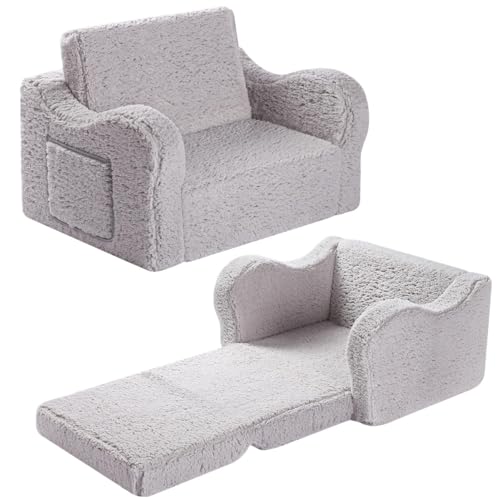
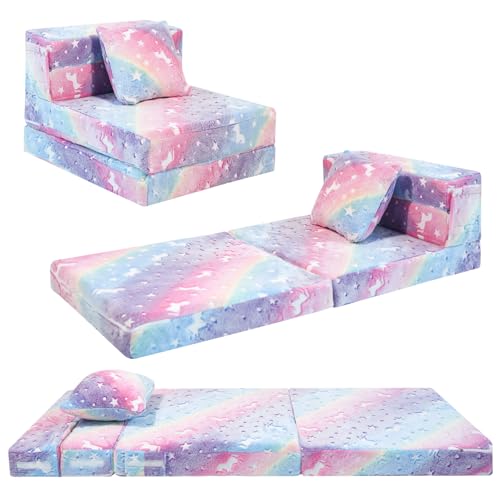
Smaller armchair-style sofa beds and modular foam pieces convert from a chair into a lounger or flat mat. They are excellent for toddlers and small spaces, though they usually sleep one child only. For very tight rooms, browse children's beds for small spaces alongside these compact options.
5. Trundle-Style and Two-Seat Convertibles
Some children's sofa beds hide a second sleeping surface, similar to a trundle. These are useful for siblings sharing a room. If a pull-out under-bed is what you need, our overview of children's beds with a pull-out bed underneath covers the same concept in bed form.
Sizing: Matching the Sofa Bed to Your Child
Children's sofa beds are not one-size-fits-all. Use this comparison table to think about which category fits your situation. Tiers describe market positioning and build quality — not any numeric figure.
| Category | Best For | Typical Build Tier |
|---|---|---|
| Toddler nap couch | Ages 2–4, daytime naps and reading corners | Essential tier |
| Single fold-out sofa bed | Ages 4–9, occasional sleepovers | Mid-tier |
| Pull-out two-seater | Ages 8–12, frequent guest use | High-end tier |
| Modular play couch | Toddlers and preschoolers, open playrooms | Essential to mid-tier |
| Teen-scale convertible couch | Ages 11+, bedrooms that double as hangout spaces | Premium tier |
When measuring, always confirm the open flat length against your child's height plus a little room to grow. Also check the footprint in couch mode, because these pieces often sit against a wall or beside a wardrobe. If floor space is truly limited, combining ideas from children's beds for small rooms with a slim sofa bed can unlock a workable layout.
Safety Checklist for Kids' Sofa Beds
Safety is the single most important factor when buying furniture for children. Run through this checklist before you commit:
- Stable frame: The couch should not tip when a child climbs or flops onto it. Look for wide bases, anti-slip feet, and a low center of gravity.
- Secure locking mechanism: Fold-out and pull-out beds must lock firmly in both couch and bed positions so they cannot snap shut unexpectedly.
- No sharp edges or exposed hardware: Hinges should be covered or recessed. Check that bolts are capped and that fabric does not hide protruding screws.
- Non-toxic materials: Choose upholstery and foam that are free of harsh chemical flame retardants where possible. Certified low-emission foams are preferable for children's rooms.
- Weight rating: Confirm the manufacturer's recommended maximum user weight. Children like to pile on friends, so a little headroom is wise.
- Anchor points: Some larger convertible couches include wall-anchor straps. Use them if they are supplied, especially in rooms where children jump and climb.
- Removable, washable covers: Spills and accidents happen. Machine-washable covers in a mid-range or premium model save a great deal of frustration over time.
Editor's tip: Test the conversion mechanism in the store with your child present, or read the instruction manual carefully after delivery. If a child can operate the bed independently, they are far more likely to use it correctly — and far less likely to force or damage it.
Materials and Upholstery: What Lasts
Children's furniture takes a beating. Prioritize durability over decorative flair. Microfiber and tightly woven polyester blends resist stains and pilling. Cotton blends breathe better but may need more frequent washing. Faux leather wipes clean instantly and is a solid choice for playrooms, though it can feel warm in summer.
For the frame, wooden frames with reinforced joints offer a classic look and long-term durability. Metal frames are lighter and often found in the entry-level tier. Foam density matters too: higher-density foam holds its shape longer, which is especially important in a piece that converts between couch and bed daily. If the room also uses quilts and covers, our collection of cotton bedspreads and comforters includes washable options that suit kids' rooms nicely.
Where a Children's Sofa Bed Works Best
Because these pieces serve double duty, placement matters. Good spots include:
- Kids' bedrooms: Replaces a bulky armchair and adds a guest sleeping spot for sleepovers.
- Playrooms: Provides crash-pad seating that flattens into a nap station at quiet time.
- Guest or spare rooms: A child-friendly extra bed without committing to a full bed frame.
- Reading corners and lofts: Compact models fit under windows or beside bookcases.
Pair the sofa bed with matching storage and small tables to keep the room tidy. Our round-up of children's bedside tables shows how a small table can anchor the sleeping zone, and options like the children's white bedside table keep the palette light and cheerful. For a playful pop of color, consider a colorful bedside table that complements the sofa's upholstery.
Sofa Bed vs. Bunk Bed vs. Standard Bed
Parents often weigh a convertible sofa bed against other space-saving beds. Here is the practical difference:
- Sofa bed: Best for daytime comfort plus occasional sleeping. Not usually intended as a primary bed every night.
- Bunk bed: Maximizes vertical space and sleeps two children. Explore children's bunk beds with stairs for safer access, or bunk beds with storage stairs when you need built-in drawers.
- Standard single bed: The most straightforward primary sleep surface. See children's beds for the full range.
Many families use a combination: a primary bed plus a sofa bed for the play area. If that is your plan, a twin-over-full bunk bed can serve a growing child and a guest, while the sofa bed handles daytime lounging.
Care and Maintenance Tips
- Vacuum upholstery weekly with a brush attachment to lift crumbs and dust.
- Wash removable covers according to the care label; air-dry when possible to protect the fabric.
- Lubricate hinges and pull-out tracks lightly every few months to keep the conversion smooth.
- Rotate and flip the seat cushion if the design allows, so foam wears evenly.
- Keep the mechanism clear of toys, blankets, and small items that can jam the fold.
Frequently Asked Questions
At what age can a child use a sofa bed?
Most toddlers can use a small nap couch from around age two with supervision. Full fold-out and pull-out models are generally best from around age four, once the child can climb safely and follow simple rules. Always check the manufacturer's minimum age guidance.
Can a children's sofa bed be used every night?
Some mid-tier and premium convertible couches are sturdy enough for regular nightly use, but many children's models are designed for occasional sleeping. If the sofa bed will be the primary bed, look for higher-density foam and a reinforced frame, and confirm the product's intended use.
How do I know if the sofa bed will fit my child's room?
Measure three things: the couch footprint in closed position, the open length when flat, and the clearance needed for the fold or pull-out motion. Leave walking space around the piece and avoid placing it directly beside a door swing.
Are children's sofa beds safe for sleepovers?
Yes, provided the model has a secure locking mechanism, a stable frame, and a flat, supportive sleeping surface. Check the recommended user weight and avoid stacking more children on the bed than the manufacturer intends.
What is the best material for kids' sofa bed upholstery?
Microfiber and tight-weave polyester blends are the most forgiving for daily family life. Faux leather is easiest to wipe clean. Cotton blends feel softer but stain more readily. In every case, removable and washable covers are a major advantage.
Can a sofa bed replace a regular bed in a small room?
In a truly compact room, yes — but choose a model rated for regular sleeping rather than occasional naps. A sofa bed frees up floor space during the day and gives your child a lounging area, which is why many families pair one with children's beds with a mattress only when a second sleep surface is required.
Ready to compare real options? Browse our curated selection of children's sofa beds and find the one that fits your child's room and routine.
COMPARE FEATURES