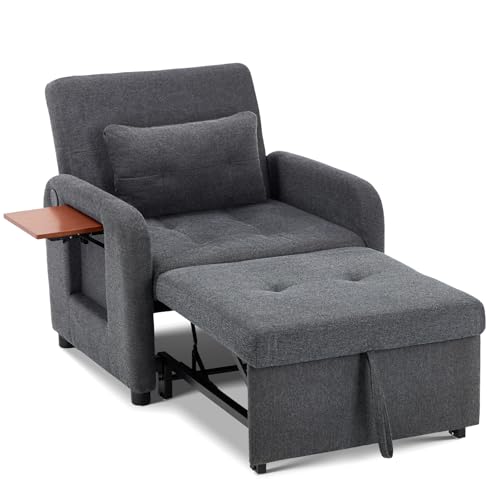
Chairs That Turn Into Single Beds
Your complete guide to convertible chair beds — how they work, which mechanisms suit your space, and what to check before choosing a sleeper chair for guests, small rooms, or everyday use.
Jump to Buying ChecklistWhy convertible chair beds matter: For anyone with a compact bedroom, a studio apartment, a home office, or a guest corner that occasionally needs to sleep one person, a chair that turns into a single bed is one of the most space-efficient furniture solutions available. This guide walks you through the mechanisms, materials, comfort factors, and practical considerations so you can choose with confidence.
What Are Chairs That Turn Into Single Beds?
A chair that turns into a single bed is a dual-purpose furniture piece engineered to serve as comfortable seating during the day and transform into a single sleeper at night. Unlike a traditional sofa bed that accommodates two people, these convertible chairs are sized for one sleeper, which makes them exceptionally space-efficient in rooms where a full-size sleeper sofa would overwhelm the layout.
The category overlaps with several related product types. Shoppers often search for chairs that convert into beds or chairs that fold into beds, and these terms generally describe the same core concept: a seat that unfolds, pulls out, or flips to create a flat sleeping surface. If you specifically want a larger sleeping area, chairs that convert into twin beds and chairs that fold out into single beds are worth comparing, while chairs that turn into beds for adults focuses on models built to support adult body weight and length.
These chairs are especially valuable in small apartments, dorms, home offices, guest rooms, and multipurpose rooms. During the day, the piece reads as a stylish accent chair or reading chair. At night, it becomes a functional sleeper that saves the expense and floor space of a dedicated guest bed. Related alternatives such as chairs that can turn into beds and chairs that turn into twin beds offer slightly wider sleeping surfaces if you need more room.
How They Work: Three Core Conversion Mechanisms
Understanding the conversion mechanism is the single most important buying decision. Each design balances setup effort, footprint, comfort, and durability differently.
1. Fold-Out Chair Beds
In a fold-out design, the seat cushion unfolds forward and lays flat, creating a sleeping surface that extends in front of the chair. This is the simplest and most common mechanism. Fold-out chairs are typically entry-level to mid-range and work well for occasional guest use. The main drawback is that the unfolded bed extends forward, so the chair needs clear floor space in front of it when open.
2. Pull-Out Sleeper Chairs
Pull-out models hide a folded mattress or platform beneath the seat. When needed, you slide out the under-seat section and fold it flat. Pull-out designs often provide a thicker sleeping surface and a more even sleep plane, which makes them better suited to regular overnight use. They generally fall into the mid-range to premium tiers because of the additional frame engineering.
3. Flip-Over Convertible Chairs
Flip-over chairs use a hinged backrest that folds down or a seat that flips backward to expose a sleeping surface. These models often have a cleaner look as a chair and can feel more like a genuine accent chair. The tradeoff is that flip-over designs typically have a thinner sleep surface and may require more upper-body strength to operate. They sit in the mid-range category and are popular in modern and minimalist interiors.
If you want to compare broader alternatives beyond single sleepers, our guides to convertible twin chair beds and fold-out single sleeper chairs cover the wider-format options in detail.
Mechanism Comparison at a Glance
| Mechanism | Tier | Best For | Setup Effort | Sleep Comfort |
|---|---|---|---|---|
| Fold-Out | Entry-Level | Occasional guests, small studios | Low — unfold and go | Moderate |
| Pull-Out | Mid-Range | Regular overnight guests, home offices | Moderate — slide and fold | Good |
| Flip-Over | Mid-Range | Design-conscious rooms, minimalist spaces | Moderate — requires lifting | Good |
| Reinforced Pull-Out | Premium | Nightly sleep, adult daily use | Moderate — smooth glide | High |
| Commercial-Grade Convertible | Luxury | Hospitality, heavy daily use | Low to moderate | High |
Comfort, Materials, and Build Quality
The comfort of a convertible chair bed depends on three factors: mattress thickness, foam density, and frame rigidity. Entry-level fold-out chairs often use thin polyurethane foam of 3 inches or less, which is acceptable for a night or two but rarely supports nightly sleep. Mid-range models typically use 4 to 5 inches of high-density foam, while premium and luxury tiers offer 6 inches or more with layered support cores, pocket springs, or gel-infused memory foam.
Frame construction matters just as much. Look for reinforced steel or hardwood frames with weight ratings that comfortably exceed the intended user's body weight. A solid build with heavy-duty hinges and rust-proof finishes will outlast a lightly built frame by years. Upholstery choices range from easy-clean polyester and microfiber to premium linen blends and performance fabrics. If the chair will see daily use, choose a fabric rated for high-traffic residential or commercial-grade upholstery.
For buyers who prioritize long-term durability, a premium pull-out model with a reinforced steel frame is the strongest long-term investment. For occasional use, an entry-level fold-out chair offers good value for its tier and remains competitive within its class.
Sizing and Space Planning
Measure twice before choosing. A closed chair bed typically occupies the footprint of a standard accent chair — roughly 30 to 40 inches wide and 32 to 38 inches deep. When open, the sleeping surface usually extends to between 70 and 78 inches in length, depending on the model and whether it is designed for adults or smaller users.
Plan for clearance in front of the chair when the bed is deployed. Fold-out designs need the most forward clearance, while pull-out and flip-over designs generally need less. If your room is very tight, a flip-over chair that stays largely within its own footprint may be the most practical choice. For rooms that also need storage, consider pairing the chair with a charging station bedside table to keep essentials organized without adding a separate nightstand.
If your sleeping needs are larger than a single, explore bunk beds with a trundle bed underneath or bunk beds with a pull-out bed underneath as space-saving alternatives for two sleepers. For younger users, bunk beds with ladder access and bunk beds with storage are worth reviewing.
Buying Checklist: What to Verify Before You Choose
Use this checklist to evaluate any convertible chair bed:
- Weight rating: Confirm the frame's tested weight capacity exceeds the intended user's weight with a comfortable margin.
- Sleep surface length: Verify the open length is suitable for the sleeper's height — adults generally need at least 74 inches.
- Mattress thickness: Choose 4 to 6 inches for regular use; 3 inches or less is best reserved for occasional guests.
- Mechanism smoothness: Check reviews for hinge and glide quality — a smooth mechanism is the difference between a chair you use and one you avoid.
- Frame material: Prefer reinforced steel or hardwood over particle board; look for rust-proof finishes on metal components.
- Upholstery durability: Select high-traffic or commercial-grade fabrics for daily use; performance fabrics resist staining and wear.
- Open footprint clearance: Measure the forward clearance needed when the bed is deployed, not just the closed footprint.
- Assembly requirements: Confirm whether legs, arms, or backrests require assembly and whether tools are included.
- Warranty: A meaningful frame warranty signals confidence in build quality — prioritize models with multi-year coverage.
Who Should Choose a Chair Bed?
A convertible chair bed is the right choice if you need a seating piece that occasionally doubles as a sleeper, if you live in a studio or compact apartment, if you want a guest-ready home office, or if you need an adult-capable sleeper without dedicating a full room to a bed. It is also a smart pick for dorms, reading corners, and multipurpose rooms where furniture must earn its space twice over.
If, however, you need to sleep two people regularly, a sofa bed or a dedicated bed will serve you better. For single sleepers who want maximum space efficiency, a chair bed is hard to beat. Shoppers comparing broader furniture strategies often also review chairs that can turn into beds and sofa bed alternatives to weigh the tradeoffs between seating capacity and sleeping capacity.
Care and Maintenance Tips
To extend the life of a convertible chair bed, vacuum upholstery weekly and spot-clean spills promptly with a fabric-appropriate cleaner. Lubricate metal hinges and glides annually with a silicone-based lubricant to keep the mechanism smooth. Rotate or flip the mattress section periodically to distribute wear evenly. Avoid placing the chair in direct sunlight for extended periods, which can fade upholstery and degrade foam. When storing the chair in its closed position, ensure the mechanism is fully locked to prevent accidental deployment.
For additional bedroom organization ideas that complement a space-saving chair bed, our guides to bunk beds with storage drawers and bunk beds with lots of storage offer practical inspiration for compact rooms.