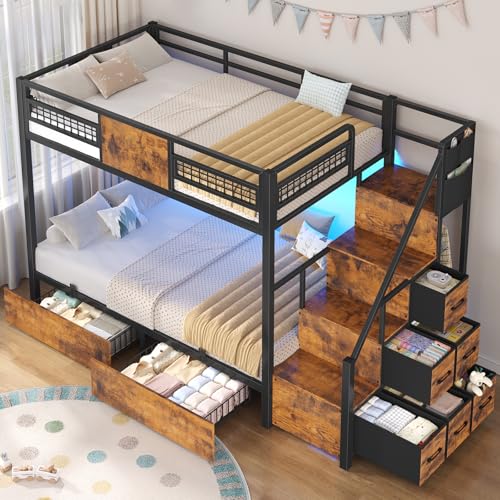
Rustic Bunk Beds Twin Over Queen: The Complete Buying Guide
Everything you need to know about choosing a twin over queen rustic bunk bed — from wood types and safety standards to styling a cabin or farmhouse bedroom that sleeps the whole family comfortably.
Explore Recommended OptionsIn This Guide
What Is a Twin Over Queen Bunk Bed?
A twin over queen bunk bed places a twin-sized sleeping surface on the upper level and a queen-sized bed on the lower level. Unlike the more common twin over twin configuration, this layout gives the bottom sleeper a significantly wider and longer surface — a meaningful upgrade for teenagers, adult guests, or couples sharing a vacation home. The size of queen beds paired with a compact twin bed footprint makes this combination one of the most space-efficient ways to sleep three people in a single room.
In its rustic form, the frame typically uses solid wood, reclaimed timber, or heavily textured finishes that evoke a cabin, lodge, or farmhouse aesthetic. The look is intentionally warm and unpolished — knots, grain variation, and matte finishes are features, not flaws. If you are still comparing configurations, our guide to rustic bunk beds twin over full explains how the full-size lower bunk differs, while the rustic queen over queen bunk beds guide covers the largest standard option.
Why a Rustic Twin Over Queen Bunk Bed Makes Sense
The twin over queen layout solves a specific problem: how to accommodate an adult or older child comfortably on the bottom without giving up the vertical space savings of a bunk. A standard queen bed occupies a large footprint on its own. Stacking a twin above it adds a third sleeping spot with almost no additional floor area.
Here is where this configuration tends to work best:
- Vacation cabins and rental properties: The rustic aesthetic matches the setting, and the queen lower bunk appeals to adult guests who do not want to climb a ladder.
- Teen and guest bedrooms: An older child gets the queen on the bottom while a sibling or friend uses the twin above.
- Multi-generational family homes: Grandparents can sleep on the lower queen while grandchildren use the upper twin during visits.
- Small bedrooms with high ceilings: The vertical build makes use of height rather than floor area, which pairs well with small bedroom solutions.
One practical note: twin over queen bunks are heavier and taller than twin over twin models. They are less suited to low-ceiling rooms or spaces where the bed must be moved frequently. If your room is tight, our small bedroom decor guide offers complementary layout ideas.
Rustic Materials and Finish Options
The "rustic" label covers a wide range of construction approaches. Understanding the material differences helps you judge durability and match the bed to your existing furniture.
Solid Wood and Reclaimed Timber
Solid wood frames — pine, oak, acacia, or rubberwood — are the most common choice for rustic bunk beds. They hold joinery well, support heavier loads, and develop character over time. Reclaimed wood adds visible history through nail holes, saw marks, and color variation. Reclaimed timber frames tend to sit in the premium to luxury tiers because of material sourcing and labor, while solid pine or rubberwood models usually occupy the mid-range. If reclaimed materials appeal to you, our reclaimed wood platform beds guide shows how the same finish translates to a single-level frame.
Engineered and Veneer Construction
Some entry-level rustic bunk beds use engineered wood with a veneer that mimics weathered timber. These can look convincing and are lighter to assemble, but they are less resistant to heavy use and humidity swings. For a bunk bed that will be climbed daily, solid wood is the safer long-term investment.
Finish and Texture
Common rustic finishes include:
- Weathered gray or whitewash: A washed-out look that suits coastal farmhouse and shabby-chic rooms.
- Natural oil or wax: Emphasizes grain and knots; typically the most durable and easiest to repair.
- Distressed dark stain: A lodge or cabin feel with visible wear patterns built into the finish.
- Two-tone combinations: A darker frame with lighter panels, often seen in modern farmhouse designs.
If your room leans toward a softer, vintage aesthetic, pair the bed with shabby chic decor elements. For a broader room direction, the rustic bedroom guide covers flooring, wall treatments, and accessory pairing in detail.
Safety Features You Must Verify
Bunk beds carry specific safety requirements that go beyond a standard bed frame. Before ordering, confirm each of the following on the product specification sheet:
Guardrails on the Upper Bunk
The top bunk must have guardrails on both sides, with no more than a small gap at the ladder opening. Guardrails should be at least five inches above the top of the mattress. This is why mattress thickness on the upper bunk matters — an overly thick mattress reduces the effective rail height.
Weight Capacity Ratings
Reputable manufacturers publish separate weight limits for the upper and lower bunks. For a twin over queen model intended for adults, look for a lower-bunk rating that clearly accommodates adult sleepers and an upper-bunk rating that matches who will actually use it. Reinforced slat systems and center support rails are indicators of a sturdier build.
Ladder Attachment and Placement
The ladder should attach firmly to the frame — not rest against it — and should have flat, wide rungs rather than round dowels. Confirm whether the ladder can be mounted on either side, since room layout often dictates placement. For nighttime access, a reading light near the ladder improves safety.
Joinery and Fasteners
Look for mortise-and-tenon or dovetail joinery on premium frames, and heavy-duty bolts with locking washers on mid-range models. Avoid frames held together primarily by cam locks or small screws at structural stress points. A solid build with reinforced corner blocks is a strong indicator of long-term stability.
Sizing, Clearance, and Room Planning
Twin over queen bunk beds are large. Planning the room around the frame prevents the most common post-purchase problem: a bed that fits the floor but not the ceiling.
| Measurement | Typical Range | What to Check |
|---|---|---|
| Overall footprint | Approximately 85–90 in long × 65–70 in wide | Confirm exact dimensions; queen lower bunks are wider than twin-over-twin models. |
| Overall height | Approximately 65–72 in | Measure ceiling height and subtract the frame height for headroom. |
| Upper bunk mattress thickness | 6–8 in recommended | Must leave guardrail height intact; follow manufacturer guidance. |
| Lower bunk clearance | Approximately 38–42 in | Enough for an adult to sit up; less if the frame is a low-profile design. |
| Recommended ceiling height | 8 ft or higher | Add extra clearance if a ceiling fan or light fixture hangs above. |
Beyond the bed itself, plan for walking space on at least two sides. A rug sized for the room — see our guide to rugs under beds — helps define the sleeping zone and softens the transition from bed to floor. If the room is genuinely small, the small bedroom storage guide covers under-bed and vertical storage that complements a bunk setup.
Styling Your Rustic Bunk Bed Room
A rustic bunk bed is a strong visual anchor. The rest of the room should support it rather than compete with it. A few practical directions:
Bedding and Textiles
Textured bedding reinforces the rustic theme without adding clutter. Quilted bedspreads in earth tones work well on the lower queen bunk, and quilts for twin beds scale correctly to the upper bunk. For a coordinated look, consider a quilted bedspread set that covers both sleeping surfaces in a matching palette. If you prefer crisp sheets underneath, satin bedsheets add a contrasting smooth texture against rough wood.
Bedside Furniture
Because the lower bunk is a queen, a full-size nightstand fits comfortably beside it. A reclaimed wood bedside table echoes the frame material, while a rattan bedside table introduces a lighter natural texture for contrast. For tighter spaces, a skinny bedside table or a small bedside table keeps the walkway clear. If two sleepers share the room, a rattan bedside table set of 2 provides matching storage on both sides.
Lighting
Each bunk benefits from its own light source. Clip-on or wall-mounted reading lights avoid the need for shared lamps, and a reading bedside lamp on the nightstand serves the lower bunk. Keep cords routed away from the ladder and guardrails.
Rugs and Flooring
A rug under the bed frames the sleeping area and provides a soft landing at the ladder. For a queen-footprint bunk, review rugs for queen size beds for sizing guidance. Layering a smaller textured rug over a neutral base adds warmth without overwhelming a small room.
Buying Checklist Before You Order
Use this checklist to evaluate any twin over queen rustic bunk bed before completing a purchase:
- Verify the exact dimensions against your room's floor plan and ceiling height, including clearance for a ceiling fan.
- Confirm separate weight ratings for the upper and lower bunks and match them to the intended sleepers.
- Check guardrail height and gap spacing on the upper bunk, and confirm the maximum mattress thickness allowed.
- Inspect the ladder design — attachment method, rung style, and whether it can be mounted on either side.
- Review the joinery and slat system — center support rails and reinforced corner blocks indicate a sturdier frame.
- Confirm the finish type — natural oil and wax finishes are easier to repair than painted or veneered surfaces.
- Check assembly requirements — some frames require two people and several hours; confirm whether tools are included.
- Review the warranty terms — coverage length and what is excluded often reveals build quality expectations.
If you are furnishing an entire room around the bed, the rustic bedroom guide and the small apartment furniture guide offer complementary layout and storage recommendations. For rooms that need a secondary sleeping surface, a queen size trundle bed for adults is a useful alternative worth comparing.
Ready to Compare Rustic Twin Over Queen Bunk Beds?
Browse recommended models selected for sturdy construction, safe guardrail design, and authentic rustic finishes. Each option links directly to current availability.
View Recommended ModelsFrequently Asked Questions
What is a twin over queen bunk bed?
A twin over queen bunk bed features a twin-sized bed on the upper level and a queen-sized bed on the lower level. This configuration is ideal for older children, teenagers, guest rooms, and vacation cabins where sleeping capacity and comfort matter.
Is a twin over queen bunk bed safe for adults?
Yes, many twin over queen bunk beds are engineered to support adult weight on both levels. Always check the manufacturer's weight capacity rating for each bunk, ensure the frame uses reinforced joinery, and verify that the upper bunk includes guardrails and a securely attached ladder.
What ceiling height do I need for a rustic twin over queen bunk bed?
Most twin over queen bunk beds require a ceiling height of at least 8 feet to allow comfortable headroom for the lower sleeper and safe access to the top bunk. Measure your room height and the assembled bed height before purchasing, and add clearance for a ceiling fan if present.
How do I style a rustic bunk bed in a bedroom?
Pair the bunk bed with warm wood tones, textured bedding such as quilted bedspreads or flannel sheets, and natural materials like rattan or reclaimed wood nightstands. Layer a soft rug underneath, add reading lights for each bunk, and keep the palette grounded in earth tones for a cohesive cabin or farmhouse look.
Do twin over queen bunk beds require special mattresses?
The upper bunk typically needs a twin mattress within a specified thickness range, often 6 to 8 inches, so the guardrail remains effective. The lower bunk takes a standard queen mattress. Always follow the manufacturer's mattress thickness guidance for the top bunk to maintain safety compliance.