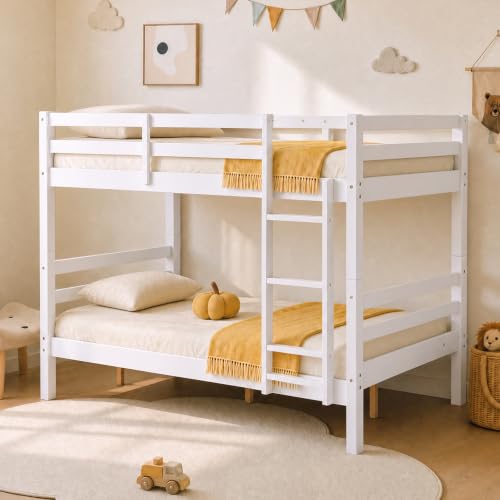
Wood Frame Full Size Bunk Beds: The Complete Buying Guide
Everything you need to know about choosing a sturdy, space-saving wood frame full size bunk bed for your family — from safety standards and mattress compatibility to design styles and long-term durability.
Explore Top PicksWhy wood frame full size bunk beds deserve your attention: A full size bunk bed offers two generous sleeping surfaces stacked vertically, making it one of the most efficient furniture investments for growing families, guest rooms, vacation properties, and shared bedrooms. When built with a solid wood frame, these beds deliver the structural integrity needed for daily use while adding warmth and character that metal frames often cannot match.
This guide walks you through the essential factors — frame construction, safety features, mattress selection, and spatial planning — so you can make a confident decision without second-guessing.
What Defines a Quality Wood Frame Full Size Bunk Bed?
The market for bunk beds is broad, and quality varies considerably. Understanding the construction details separates a bed that lasts a decade from one that wobbles within months. Here are the core characteristics that matter most:
Solid Wood Construction
Look for frames made from solid pine, oak, or maple. These materials resist warping and hold screws and bolts tightly over time. Engineered wood with a solid wood veneer is acceptable for panels, but structural components — rails, posts, and slats — should be solid wood for maximum longevity.
Reinforced Joinery
High-quality bunk beds use mortise-and-tenon joints, dowel reinforcements, or metal-on-metal bolt connections at critical stress points. Avoid beds that rely solely on screws driven into end grain, which can loosen with movement over time.
Comprehensive Safety Features
Full-length guardrails on the upper bunk, a sturdy built-in ladder with wide treads, and a minimum 5-inch guardrail height above the mattress surface are non-negotiable. Premium models often add anti-tip straps and rounded edge profiles for extra peace of mind.
Proper Slat Support
A well-designed slat system distributes weight evenly and extends mattress life. Look for closely spaced slats (no more than 3 inches apart) or a solid platform base. Slats should be at least 0.75 inches thick and securely fastened to the rails.
If you are comparing different bunk bed configurations, you may also want to explore wood frame full over full bunk beds for a similar footprint, or consider wood frame bunk beds twin over full if you need a smaller upper sleeping surface. Families with younger children often pair a full size bunk bed with zip-off sheets for bunk beds to simplify laundry day.
Full Over Full vs. Twin Over Full: Which Configuration Fits Your Space?
Before committing to a specific model, clarify the sleeping arrangement that best matches your household. Two common configurations dominate the market:
| Configuration | Best For | Space Requirement | Sleeping Capacity |
|---|---|---|---|
| Full Over Full | Teenagers, adults, guest rooms, families with two older children | Requires a larger footprint; ideal for rooms with at least 12 x 12 feet of floor space | Two full-size sleepers (up to adult weight capacity on premium models) |
| Twin Over Full | Siblings of different ages, rooms with limited width, transitional setups | More compact width; suitable for rooms around 10 x 10 feet | One twin sleeper on top, one full sleeper below |
If you are leaning toward the twin-over-full layout, our detailed guide on wood bunk beds twin over full covers the specific considerations for that arrangement. For maximum flexibility, some families choose wood bunk beds that can be separated into two independent beds when children grow older.
Safety Standards You Should Verify Before Buying
Bunk bed safety is not a feature to overlook. Whether you are shopping for children or adults, confirm that the model meets recognized safety guidelines:
- Guardrail height: The upper bunk must have guardrails on both sides, with the top edge at least 5 inches above the mattress surface. This prevents accidental roll-off during sleep.
- Ladder attachment: A securely fastened ladder with at least three rungs and a weight capacity matching the bed's overall rating is essential. Some premium models include a ladder that hooks over the top rail for added stability.
- Weight capacity: Check the manufacturer's stated weight limit for both the upper and lower bunks. High-end tier models often support 400 pounds or more per sleeping surface, making them suitable for adults.
- Entrapment hazards: Ensure the gap between the mattress and guardrail is minimal, and that the bed frame has no openings between 3.5 and 9 inches that could pose an entrapment risk for young children.
- Anti-tip restraint: A strap or bracket that anchors the bed frame to the wall is a strong indicator of thoughtful design and should be included or available as an accessory.
Practical tip: If you are setting up a bunk bed in a room with a ceiling fan, verify that there is at least 30 inches of clearance between the top of the upper mattress and the fan blades. Similarly, ensure the upper bunk is not positioned directly under a light fixture that could be reached from the top mattress.
Mattress Compatibility: What Works Best with Wood Frame Bunk Beds
Mattress selection is often the most overlooked aspect of bunk bed ownership. A mattress that is too thick can compromise guardrail safety on the upper bunk, while one that is too thin may feel uncomfortable and wear out quickly.
Recommended Mattress Characteristics
- Thickness: 8 to 10 inches is the sweet spot for most wood frame full size bunk beds. This provides adequate comfort while keeping the mattress top safely below the guardrail threshold.
- Firmness: Medium-firm to firm mattresses work best. They reduce motion transfer (important when two people share a room) and maintain their shape on slat foundations.
- Type: Memory foam and hybrid mattresses are excellent choices because they conform to the sleeper's body without excessive bounce. Innerspring mattresses are acceptable but should have a reinforced edge for stability.
- Foundation compatibility: Verify that the mattress is suitable for use on a slat base. Some mattress warranties specify that a solid platform or closely spaced slats are required.
For more insight on extending the life of your mattress and knowing when it is time for a replacement, refer to our guide on when to replace your mattress. If you are also furnishing the surrounding room, you might find inspiration in our selection of wooden beds king size for primary bedrooms or wooden bed frames for additional guest accommodations.
Design Styles and Finishes: Matching Your Bedroom Aesthetic
Wood frame full size bunk beds are available in a range of finishes and design languages. The right choice depends on your existing decor and the room's overall palette:
Natural Wood Finish
Pine, oak, and maple frames with a clear or light stain bring warmth and a Scandinavian-inspired feel. These finishes pair well with neutral bedding and minimal decor.
White or Painted Finish
A crisp white bunk bed brightens smaller rooms and complements coastal, farmhouse, or cottage styles. If you prefer a cohesive look, consider pairing the bed with a white bedside table with drawers for a unified bedroom set.
Espresso or Dark Walnut
Darker finishes add a sense of sophistication and work well in contemporary or transitional interiors. They hide minor scuffs effectively, which is a practical advantage in high-traffic rooms.
Two-Tone or Contrast Designs
Some models combine a painted frame with natural wood accents on the headboard or ladder. These designs add visual interest without overwhelming the space.
For coordinating pieces, you may want to browse our collection of walnut bedside cabinets or wooden 3-drawer bedside tables to complete the room. If you are designing a shared children's room, consider adding white bedside tables with storage for books and small toys.
Space Planning: Making a Full Size Bunk Bed Work in Your Room
A full size bunk bed measures approximately 54 inches wide and 75 inches long. Before ordering, measure your room carefully and account for the following:
- Ceiling height: You need sufficient vertical clearance for the upper bunk. A standard 8-foot ceiling works for most designs, but always check the manufacturer's recommended minimum ceiling height.
- Floor space: Leave at least 24 inches of walking space around the bed. If the bed is positioned against a wall on two sides, ensure the ladder is on the open side for safe access.
- Door and window clearance: Avoid placing the bed directly in front of a window or door. If space is tight, a wall-mounted folding bunk bed may be a better solution for occasional use.
- Storage integration: Some wood frame bunk beds include under-bed drawers or a built-in desk. If storage is a priority, explore wood bunk beds with desk configurations or wooden bunk beds with drawers.
For rooms with limited floor area, a white bunk bed with storage can maximize utility without sacrificing style. If you are furnishing a vacation property or guest suite, white full over full bunk beds offer a bright, welcoming look that guests appreciate.
Care and Maintenance for Long-Term Durability
A wood frame bunk bed is an investment in your family's comfort. With proper care, it can serve multiple children and even transition into adulthood. Follow these maintenance practices:
- Tighten hardware periodically: Check bolts and screws every few months, especially after the first month of use. Wood expands and contracts with seasonal humidity changes, which can loosen connections.
- Clean with a damp cloth: Avoid harsh chemical cleaners that can strip the finish. A mild soap solution and a soft cloth are sufficient for routine cleaning.
- Inspect slats and guardrails: Replace any cracked or warped slats immediately. Verify that guardrails remain secure and that the ladder hooks are not bent.
- Control humidity: Wood performs best in environments with 30–50% relative humidity. In very dry climates, a room humidifier can prevent cracking; in humid climates, ensure adequate ventilation.
- Use mattress protectors: Spills and accidents are inevitable in family settings. A waterproof mattress protector extends mattress life and simplifies cleanup.
If you are also considering bedding upgrades, our guides on washable king size bedspreads and white quilted bedspread queen offer practical options for busy households.
Common Mistakes to Avoid When Buying a Wood Frame Full Size Bunk Bed
- Overlooking the weight capacity: Not all bunk beds are rated for adults. If teenagers or adults will use the upper bunk, verify that the frame supports at least 250 pounds per sleeping surface.
- Choosing the wrong mattress thickness: A mattress that is too thick can render guardrails ineffective. Stick to the 8–10 inch range unless the manufacturer specifies otherwise.
- Ignoring assembly requirements: Some bunk beds require professional assembly or two people for safe setup. Check the product details for assembly difficulty and required tools.
- Skipping the wall anchor: If the bed includes an anti-tip strap, install it. This is a simple step that significantly improves safety.
- Placing the bed in a high-traffic area: Bunk beds should be positioned away from swinging doors and walkways to prevent collisions and injuries.
Frequently Asked Questions
Explore related collections: If you are still comparing options, browse our guides on wooden bunk beds for a broader overview, or explore wood frame twin over twin bunk beds if a smaller footprint suits your room better. For younger children, white twin bunk beds with stairs offer an easier climb than a traditional ladder. And if you are furnishing a complete bedroom, do not miss our wooden day beds collection for versatile seating and sleeping solutions.